Wilmar International Stock Summary & Metrics
| Stock Name | Wilmar International Limited |
| Ticker | SGX: F34 |
| 1H2026 Core Net Profit | US$642.0 million (Up 10% YoY) |
| Dividend (TTM) | S$0.15 |
| Dividend Yield | 4.4% |
| Valuation Metrics | P/B Ratio: 0.8xP/E Ratio: 11.9x |
What do you do with a stock that has frustrated investors for years, yet is finally showing signs of life?
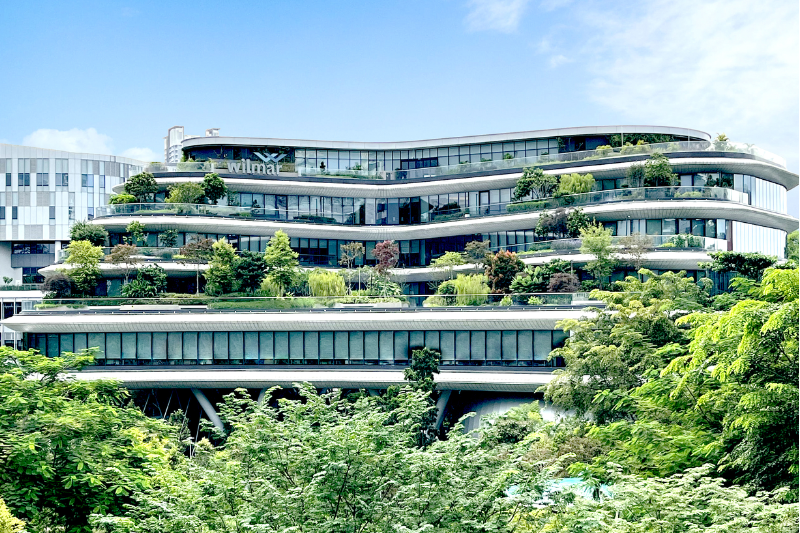
That’s the question with Wilmar International Limited (SGX: F34).
The agribusiness crushes soybeans, refines palm oil, mills sugar and sells cooking oil and flour across more than 50 countries, including China, India and Indonesia.
Its profit has fallen sharply since 2022.
But the first half of 2026 (1H2026) looked better.
Wilmar’s share price closed at S$3.45 on 15 October 2026, down 13% from S$3.97 in August.
So, is this a real turnaround, or a value trap?
What Has Been Holding Wilmar Back?
Wilmar’s profit peaked in 2022 and hasn’t recovered.
Net profit fell from US$2.4 billion that year to US$1.2 billion in 2024. It then rose to US$1.4 billion in 2025, helped by one-off gains.
Without the one-offs, “core” profit was US$1.28 billion, about 47% below the 2022 level.
| FY2022 | FY2023 | FY2024 | FY2025 | 1H 2026 | |
|---|---|---|---|---|---|
| Revenue (US$ billion) | 73.4 | 67.2 | 67.4 | 70.4 | 38.6 |
| Net profit (US$ million) | 2,402 | 1,525 | 1,170 | 1,411 | 609 |
| Core net profit (US$ million) | 2,420 | 1,567 | 1,164 | 1,278 | 642 |
| Net margin | 3.3% | 2.3% | 1.7% | 2.0% | 1.6% |
The weakest division is plantations and sugar milling, where profit before tax fell 32% in 1H2026.
Sugar prices stayed low, and Wilmar wrote down US$24.7 million on Indian sugar mills.
China is a worry.
Yihai Kerry Arawana Holdings Co., Ltd (SZSE: 300999), or YKA, is Wilmar’s 89.99%-owned China business.
Its 1H2026 net profit jumped 30.7% on a reported basis, but underlying growth was only 6.6% once one-off gains were stripped out.
A YKA subsidiary is also appealing a fraud ruling that orders it to bear 1.88 billion yuan (about S$345 million) of losses.
Indonesia has been a bigger blow.
In September 2025, Indonesia’s Supreme Court ordered five Wilmar units to pay 11.88 trillion Indonesian rupiah (about US$709 million) over a cooking oil export case.
A Wilmar executive in Indonesian was convicted of bribery, leading to a sharp sell-off in Wilmar’s share price in March 2026.
India is brighter.
AWL Agri Business Limited (NSE: AWL), formerly Adani Wilmar, grew revenue 24% year on year (YoY) in its July to September quarter.
These factors have caused some consternation among investors, but some should fade.
Commodity prices swing both ways, and the Indonesian payment was a one-off.
Other problems look stickier: thin margins, US$20.7 billion of net debt and open court cases in two big markets.
What Could Drive Wilmar’s Comeback?
Wilmar’s 1H2026 core profit rose 10% to US$642.0 million, led by the feed and industrial products division.
Wilmar kept more from each tonne of palm oil it refined.
Soybean crushing, which turns beans into oil and meal, also improved on strong Chinese demand for animal feed.
| Profit before tax (US$ million) | 1H2025 | 1H2026 | Change |
|---|---|---|---|
| Food products | 195.7 | 304.6 | +56% |
| Feed and industrial products | 381.6 | 591.0 | +55% |
| Plantations and sugar milling | 202.0 | 137.7 | -32% |
Part of the jump in the Food products division’s profit before tax came from selling joint ventures in China, which won’t repeat.
That said, the Food products division could be a key trigger for Wilmar’s share price appreciation.
Food volumes rose 19%, but most of that came from adding AWL to Wilmar’s accounts in December 2025.
Without AWL, volumes grew just 2%.
Still, people buy cooking oil and flour in any economy.
The older businesses are mixed.
Volumes of oilseeds and grains, which come under the Feed and industrial products division, rose 6%, but Indonesian palm fruit output fell 6% from a year earlier, and sugar prices are low.
What matters is the processing margin, which is the gap between what Wilmar pays for beans and palm fruit and what it earns on the oil and meal.
Is Wilmar’s Balance Sheet Strong Enough to Support a Recovery?
Net debt rose by US$707.6 million over six months to US$20.67 billion, leaving the debt/equity ratio at 0.93.
But most of Wilmar’s debt is used to fund working capital.
Leave that out and the adjusted debt/equity ratio drops to 0.33.
Working capital matters for commodity businesses.
When soybean and palm oil prices rise, Wilmar has to borrow more just to hold the same inventory.
Cash flow was thin.
In 1H2026, operating cash flow of US$522 million fell short of capital spending of US$680 million, resulting in negative free cash flow.
That said, capital expenditure halved between FY2023 and FY2025, which could support Wilmar’s ability to generate free cash flow going forward.
Can Investors Still Count on Wilmar’s Dividends?
Shareholders got S$0.17 per share in dividends for 2022 but only S$0.14 per share for 2025.
But the cash paid out hovered between US$659 million and US$796 million a year, even as profit swung.
The 1H2026 interim dividend rose 25% YoY to S$0.05 per share.
That takes Wilmar’s dividend in the last 12 months to S$0.15 per share, a 4.3% yield at S$3.45.
Free cash flow did not always cover the dividend from 2022 to 2025, falling short in some years.
With net profit forecast to be US$1.5 billion for 2026, a 50% payout amounts to about S$0.15 a share, so a big dividend increase looks unlikely.
Wilmar’s dividend pays you to wait, but real gains require higher profits.
Is Wilmar Undervalued Today?
Against its assets, Wilmar looks cheap.
The price-to-book (P/B) ratio stands at 0.8x, potentially indicating undervaluation.
Against profit, it’s less cheap.
A price-to-earnings (P/E) ratio of 11.9x is higher than the average of 10.4x at the end of each of the past five years.
Analysts expect a better second half for Wilmar.
DBS’s 2026 forecast needs about US$848 million of net profit in the second half of 2026, against US$642 million in the first half.
Lasting food profits and positive free cash flow would help justify a higher price.
Risks include commodity swings, weaker demand in China, higher interest costs on about US$32 billion of gross debt, and rules and court cases in Indonesia and China.
Get Smart: Is Wilmar Ready for a Turnaround?
So, turnaround or value trap?
The evidence leans towards a real recovery.
Core profit rose 10% in 1H2026, food and feed profits climbed more than 50%, and Wilmar sells things people keep buying.
But the price already reflects some of that.
FY2025 core profit was still 47% below its 2022 level, free cash flow has often been negative and court cases remain open.
Watch the second-half results to see whether the recovery holds.
2008. 2020. 2022. Three of the toughest stretches for Singapore markets in a generation. We found 6 SGX companies that paid a dividend every single year through all three. Our free report reveals the six companies and what allowed them to keep paying when others couldn’t. Click here to download now.
Follow us on Facebook, Instagram, Telegram and YouTube for the latest investing news and analyses!
Disclosure: Wilson H. does not own shares in any of the companies mentioned.