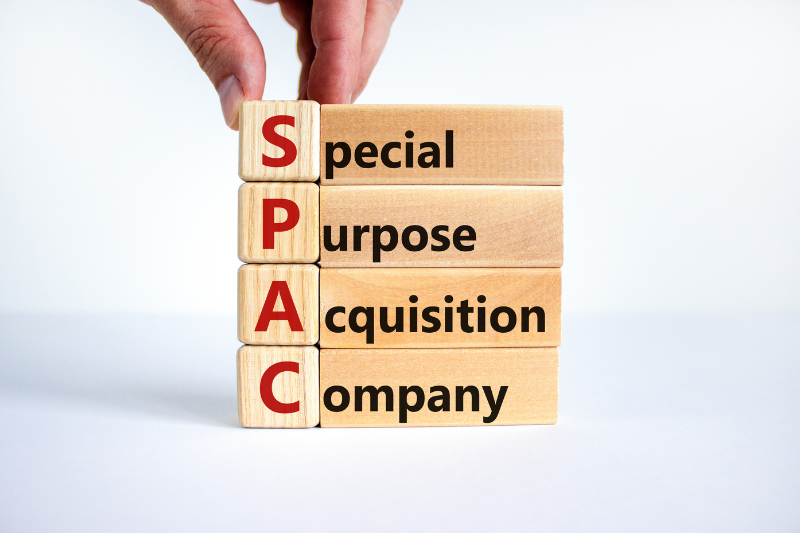
The SPAC (Special Purpose Acquisition Company) craze has well and truly hit the market.
From making up just a fraction of all funds raised through IPOs in the USA in the past, SPACs have grown to become the bulk of IPOs in the first quarter of 2021. During the period, SPACs’ fundraising made up 69% of all IPO proceeds raised, up from around 20% in 2020.
The recent booming interest in SPACs raises a question: Do SPACs really make good investments? In this article, I run through some of the pros and cons of investing in SPACs, who are the winners and losers in this space, and why I’m avoiding any SPACs pre-merger.
Why are SPAC IPOs so popular?
SPACs are entities that are formed with the intention of merging with another existing company. SPAC investors will then become shareholders of the new combined entity.
When SPACs raise money at an IPO, investors are simply providing the “shell” company with the capital to acquire another business. Before acquiring a company, SPACs have no commercial operations and are therefore sometimes referred to as “blank check companies”.
Part of the popularity of SPACs is their potential growth. If a SPAC is able to acquire a good company at a good valuation, investors could reap the long-term gains from the combined entity.
Some SPACs may be in a position to acquire great companies due to the SPAC sponsor. SPACs that are sponsored by big-name investors or expert investment managers have the connections and expertise to acquire an early-stage company that has the potential to grow much bigger.
SPACs also provide downside protection as SPAC shareholders have the right to redeem their shares and be repaid from the trust account should they not like the deal. If they choose to redeem their shares, SPAC shareholders can get back cash based on the IPO price per share plus interest.
Investors who are lucky enough to invest at the IPO can also reap some returns once the SPAC starts trading as the share prices of SPACs tend to trade at a premium to their cash value due to the hope that the SPAC can put the money to good use.
SPACs often throw in an additional incentive for investors to invest at its IPO, known as a “warrant”. Warrants give holders the right to buy more shares from the company at a specific price on a specified future date. These warrants can be traded separately and can be worth more if the SPAC shares rise. These free warrants are an additional kickback to being an IPO SPAC investor.
Fees, dilution, and misaligned incentives
Although SPACs may seem enticing on the surface, there are associated costs that may make them a poor investment for latecomers.
One of the big costs to investing in SPACs is the “sponsor promote,” which are free shares that are issued to a SPAC’s sponsors once a merger is finalised.
For example, in a US$500 million SPAC, IPO investors may fork out US$500 million and receive 50 million in shares with a net cash value of US$10 each. But once a merger is secured, the SPAC sponsor gets free shares that typically make up 20% of the number of shares sold in the SPAC’s IPO.
As such, in my example, the number of SPAC shares increases from 50 million to 60 million and the net cash of each share drops to US$8.33. So essentially, shareholders paid US$10 (or more if they bought in after the IPO when the price has risen) for a share that now only holds US$8.33 in cash.
In addition, redemptions may reduce the cash per share of the SPAC. Remember I mentioned that SPAC shareholders have the right to redeem shares at the IPO price plus interest. But redemptions are not good for the remaining shareholders of the SPAC.
Redemptions reduce the amount of cash left in the SPAC disproportionately more than reducing the share count. For example, a SPAC that raises US$500 million in cash may end up with around US$490 million in cash after accounting for IPO underwriting fees. However, to fulfil redemption requests, the SPAC still needs to pay back $10 per share for each share redeemed when the cash per share was actually only US$9.80 per share.
Research by Stanford law found that while the SPACs they studied issued shares for roughly $10 and value their shares at $10 when they merge, at the time of a merger, the median SPAC holds cash of only $6.67. This is due to dilution, underwriting fees, and share redemptions.
Throw in the warrants that IPO investors are given, and the potential total dilution could be far worse. Investors who didn’t buy in at the IPO and didn’t receive warrants are fighting an uphill task to make a profit.
I haven’t even mentioned another cohort of investors who get special treatment- the PIPE investors. PIPE stands for private investment in public equity and these PIPE investors are offered shares just before a SPAC-merger deal closes to make up for any cash shortfall for the deal. PIPE investors are usually offered shares at IPO prices, which are lower than what the shares usually trade at. Although not exactly dilutive, PIPE investors get much better deals than retail investors who bought in at market prices after the IPO.
Another risk is that SPAC deals may not always turn out so well. The study by Standford Law found that SPAC shares tend to drop by one-third of their value or more within a year following a merger.
Some of the reasons why SPAC acquisitions may turn out poorly is due to misaligned incentives and the time scale involved. SPACs usually have a two-year time period to make an acquisition. This puts pressure on the sponsor to find a deal. To avoid closing the SPAC without finalising a merger, the sponsor may rush to complete a deal even if it may not be best for shareholders. These poor business acquisitions and heavy dilution may result in poor long-term stock performance for SPACs.
Winners and losers in SPACs
The odds of long-term success for SPAC shareholders are clearly stacked against them. The heavy dilution from “promote” shares given to the sponsor, the high fees involved, and the dilution from redemptions, put long-term shareholders on the back foot.
But not everyone is a loser.
The biggest winners in the deal are usually the sponsors. The sponsors are given promote shares even when they put up relatively little capital. Even if the share price falls, sponsors are able to make healthy profits as they received their shares at a very low cost.
Investors who invest during the IPO and sell before the merger may also reap substantial gains. As mentioned earlier. SPACs tend to trade at a premium to their net cash value before a merger is done due to the hope that a good deal can be struck.
IPO investors who bought in at cash value and sell in the stock market before a deal closes can make a healthy profit. They can also sell the warrants for extra profit on the side.
The losers are investors who invest after the IPO when the stock prices have risen to a large premium over the diluted net cash value. Unless the SPAC acquires an exceptional company at a really good price, latecomers to a SPAC are left with an uphill task to even make a profit.
Although there have been a few positive outcomes, the odds of long-term success, post-merger, are stacked against SPAC shareholders.
Conclusion
I get why the SPAC market is booming. Raising money at an IPO for SPACs is easy as investors believe they can make a quick buck even before a merger is confirmed. The warrants and redemption promise make it an even sweeter deal for IPO investors. Sponsors are also enticed by the potential huge gains once they receive their promote shares which could be worth hundreds of millions of dollars.
However, for investors who are buying SPACs in the secondary market, the odds of success are much lower. Misaligned incentives and heavy dilution put long-term shareholders at a disadvantage.
The fact that SPAC shareholders rely on the sponsor to make a good acquisition creates even more uncertainty. Investors who want to buy SPACs on the open market should consider these factors when making any investment decision.
Note: An earlier version of this article was published at The Good Investors, a personal blog run by our friends.
Are you investing for your retirement? If so, that’s a smart move. But there’s a big problem. Most investors think it’s either dividends or growth. When in fact, it’s possible to do both at the same time! Best of all, you can find these stocks in the SGX. We found 8 such stocks and revealed the details in a FREE report, 8 Singapore Stocks for Your Retirement Portfolio. Click here to download the report today.
Follow us on Facebook and Telegram for the latest investing news and analyses!
Disclosure: Jeremy Chia does not own shares in any of the companies mentioned.