Mention the name Apple (NASDAQ: AAPL) and the iPhone comes to mind.
With nearly 2.4 billion iPhones in circulation today, the smartphone is one of the most successful consumer products ever. Since fiscal 2022 (FY22), the iPhone has generated north of US$200 billion in revenue, a staggering figure.
The success of the product has also been good for investors.
Shareholders have benefited from both capital gains and dividends.
If you ask my co-founder David Kuo, his eyes are firmly on the income Apple generates for shareholders. For him, the amount the company shares from its profits is what matters.
Thankfully, there’s good news on this front.
How time makes a huge difference
Back in June 2010, I was fortunate to buy shares of the iPhone maker at US$8.75 per share.
At the time, Apple wasn’t paying a dividend.
In June 2012, the Cupertino company surprised investors by offering a quarterly dividend of around US$0.095 per share (split-adjusted) for an annualised dividend of around US$0.38 per share.
When the dividend was offered, Apple’s yield was a decent 4.3% for the price I bought.
After a 30% dividend withholding tax, the yield would be a little over 3%, still a decent percentage.
That was just the start.
The major dividend gains were about to unfold over the next 15 years, with Apple’s annualised dividend steadily rising from US$0.38 in June 2010 to US$1.00 per share today.
If you compare today’s dividend with my original buy price, the yield could be hefty 11.4%.
After a 30% dividend withholding tax, the yield would be 8%, a pleasing reward for holding the shares since mid-2010.
In other words, the secret to an 8% dividend yield was patience.
Wait, there’s more to consider.
With shares trading at around US$241.40 today, the capital gains amount of over 27 times the original price paid.
How Asia made a huge difference
Dividends are paid in cash.
For a company such as Apple to increase its dividends over the last 15 years, it has to generate higher profits over this period. To increase profits, it needs a sustainable, growing business that is built to last for decades.
Having a great product such as the iPhone is just the start.
Apple also needs enough consumers to support its sales growth over the past 15 years.
For David, Asia Pacific consumers have played a big role in enabling Apple to grow to its current trillion-dollar status.
He’s not wrong.
Since FY13, Asia Pacific revenue, with the exception of Japan, has risen at rate faster than Apple’s overall topline growth. Translation: the region has been a growth driver for the iPhone manufacturer over the past decade.
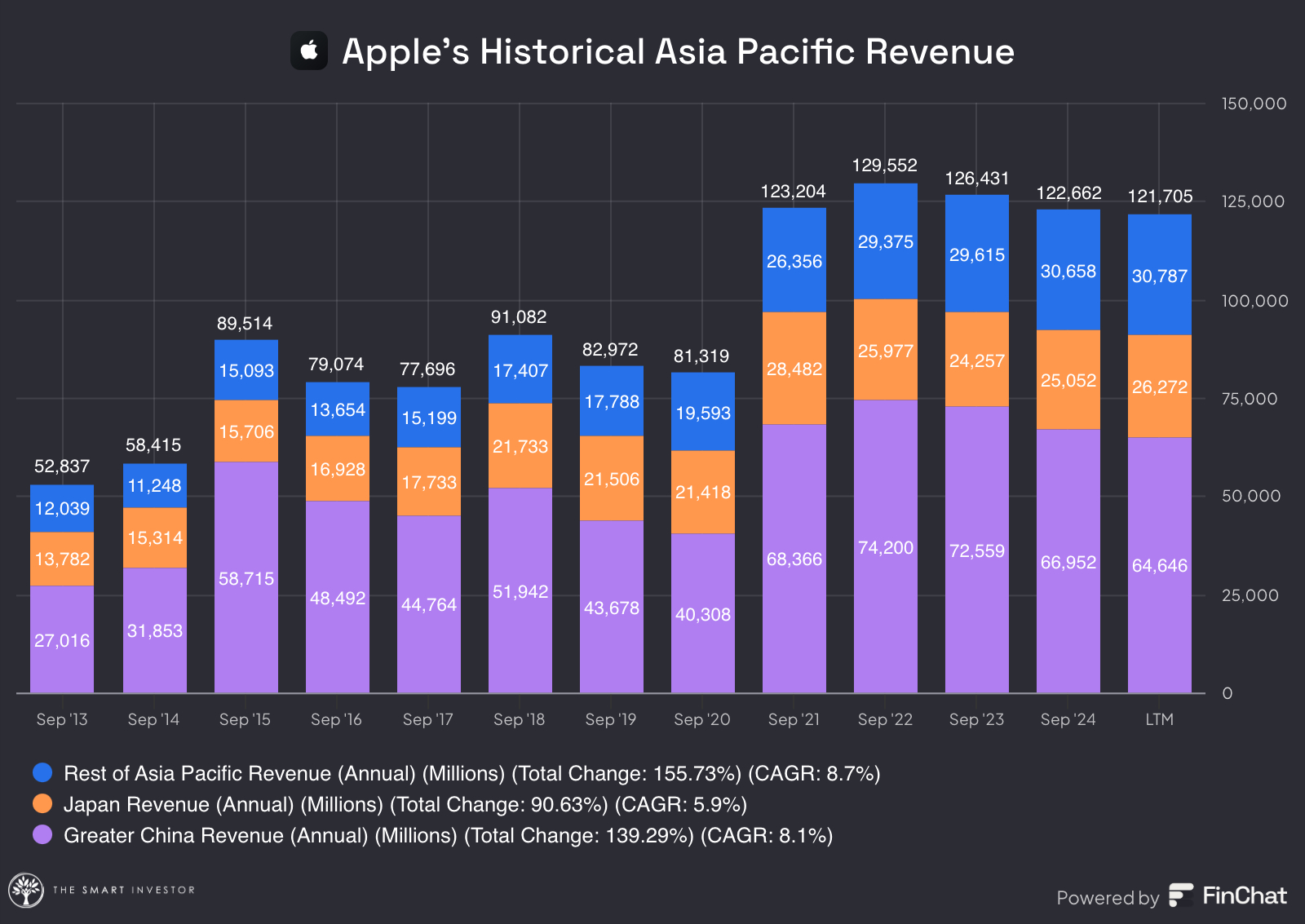
Today, Asia Pacific accounts for 31% of Apple’s overall revenue, signifying the importance of the region to its business.
Get Smart: Start from the Asian consumer
At the core, dividend investing is not complicated.
If you follow David’s lead, you should look for products that will benefit from the rise of the Asian consumer. You also want to be sure that the business that produces these goods are able to do so profitably.
Furthermore, the profits made have to be shared as a dividend.
if these businesses can increase their dividends over time, you have all the ingredients for a winning combination.
Looking to create a lifelong income stream? Check out our report, ‘7 Singapore Blue-Chip Stocks That Can Pay You for Life.’ We uncover a powerful lineup of dividend-paying stocks with the reliability and growth potential you need in today’s market. Don’t miss out on these dependable picks. Download your copy now and start building a secure financial future!
Follow us on Facebook and Telegram for the latest investing news and analyses!
Disclosure: Chin Hui Leong (still) owns shares of Apple.