For dividend income hunters, a high yield might be tempting, but ultimately, what matters most is the reliability of the payout.
In fact, high-yield stocks are often some of the most dangerous; what you really want is to be able to receive payouts come rain or shine.
To find that stability, we must examine the safest dividend payers on the Singapore Exchange (SGX: S68), or SGX, and understand why a “safe dividend” means more than just yield.
The key takeaway is that the ideal company pays a consistent annual dividend regardless of market conditions or gyrations.
After all, the durability of the business is what counts – and often, it is the “boring” businesses that provide the most stable returns.
The 4 Key Data Points That Matter Most
How do investors determine if a company’s dividends are sustainable?
Here are four key data points to take note of.
- Firstly, a sustainable dividend payout ratio is important: we want companies that can pay dividends from internally-generated earnings. A low payout ratio is thus ideal.
- Companies that are able to generate positive and consistent cash flows signal safety; after all, dividends are paid with cash.
- A strong balance sheet with low debt or manageable leverage is another factor that can help support a company’s ability to pay dividends.
Think about it, if a company has high debt, its ability to pay dividends can be hampered because it requires financial resources to service or pay down its debt.
- Furthermore, a company’s track record of paying reliable dividends is equally important, as its ability to consistently pay dividends regardless of market conditions suggests resilience.
Although the past does not guarantee the future, it still counts for something worth investors’ attention.
With that, we look at four Singapore stocks that come across as the safest dividend payers on the SGX.
Venture Corporation Limited (SGX: V03), or Venture — The Cash Flow Fortress
Venture stands out with its ability to consistently generate positive free cash flow over the last decade.
This ability to generate cash has supported the company’s dividend.
Despite the lower earnings in FY2025, the group generated free cash flow of S$223.5 million, down 52.0% year on year (YoY) due to unfavourable working capital movements and higher capital expenditure.
Over the same decade, Venture has paid a dividend each year, and the dividend has increased steadily over time, from S$0.50 per share in 2016 to S$0.80 per share in 2025.
The company has also been able to do so without relying on debt.
VICOM Limited (SGX: WJP) — The Balance Sheet Defender
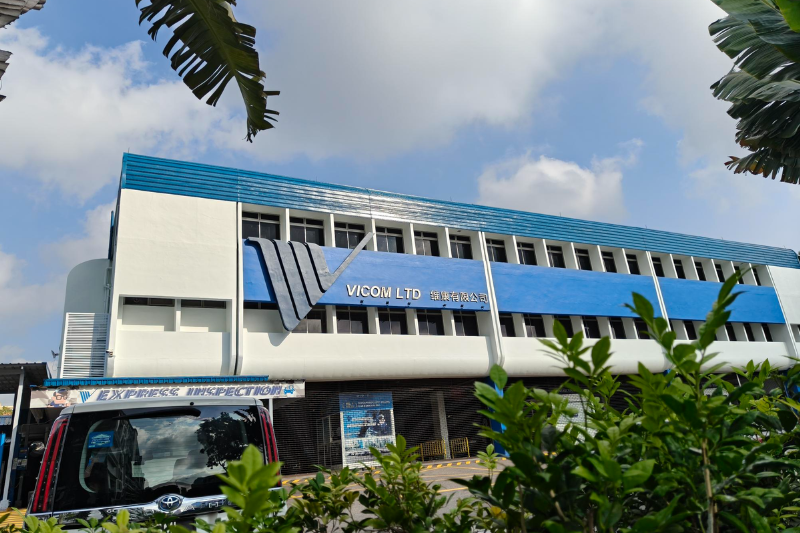
Vehicle owners should be familiar with VICOM, given its island-wide vehicle testing centres.
VICOM stands out with its low leverage, carrying zero debt and a cash position of S$57.9 million as of 31 December 2025.
This financial strength, along with the company’s stable net income and free cash flow, has allowed VICOM to pay out a decent annual dividend.
From 2016 to 2025, the group delivered payouts between S$0.04 to S$0.096 per share, excluding special payouts.
For FY2025, VICOM declared a final dividend of S$0.053 per share, bringing total dividends to S$0.084 per share, a notable increase FY2024’s S$0.058 per share.
ST Engineering Limited (SGX: S63) — The Dividend Consistency Leader
ST Engineering, or STE, stands out with its solid dividend track record.
From 2017 to 2025, its dividend has increased from S$0.15 per share to S$0.23 per share, and it has either maintained or grown its annual dividend.
The group also implemented a progressive dividend policy from 2026 onwards, which will see an incremental dividend declared equivalent to one-third of the year-on-year increase in net profit.
The company’s businesses, comprising commercial aerospace and defence technologies as the key components, have allowed it to generate consistent earnings and free cash flow over the years.
With an order book of S$33.2 billion as of 31 December 2025, STE is well-positioned to continue in its growth momentum and to support its dividend-paying ability.
Singapore Telecommunications Limited (SGX: Z74), or Singtel — The Defensive Yield Name
Rounding things off, we have a telecommunications giant in Singtel.
The group benefits from operating in an industry with resilient demand, which allows it to generate consistent earnings and cash flow, regardless of market conditions.
Singtel’s earnings and cash flow are supported by its stable revenue profile, with revenue coming in at a range of S$14 billion to S$16 billion over the past five years.
Along the way, the company’s core dividend has increased from S$0.075 per share in FY2021 (fiscal year ended 31 March 2021) to S$0.17 per share in FY2025.
What Dividend Investors Should Avoid
In general, investors should avoid high yields that are unsustainable – specifically, dividends that are not adequately covered by earnings and cash flow.
Furthermore, companies with high debt loads should be a red flag for income seekers.
While high-yielding companies often look “sexy”, they fail to provide reliable dividends when the going gets tough.
Get Smart: Safe Dividends Are Built, Not Promised
In sum, dividend defensibility comes from reliable businesses that generate solid earnings and cash flows with manageable debt levels.
As always, fundamentals – not hope – are what get you paid as an income investor.
Defence is the ultimate offence; focus on business durability rather than blind hope or unsustainable high yields.
One Singapore bank has quietly become one of the strongest income engines in the market. Its dividends have grown at 16.6% a year while others were pulling back. That level of consistency can change a retirement plan entirely. Our FREE 2026 Dividend Game Plan explains why this bank keeps lifting payouts and why many long-term investors rely on it for stable income. Download your free copy today.
Follow us on Facebook, Instagram and Telegram for the latest investing news and analyses!
Disclosure: Wilson H. does not own any of the companies mentioned.