The fate of Singapore’s stock market for the next 15 years rests on just 10 companies.
That’s not hyperbole – it’s math.
The Straits Times Index (SGX: ^STI) just hit an all-time high above 4,400 earlier this month.
Then came the bold prediction by DBS Group’s (SGX: D05) research: 10,000 by 2040.
Here’s the uncomfortable truth: reaching that target will depend almost entirely on a select group of stocks.
Everyone’s asking the wrong question, though.
It’s not whether the STI will hit 10,000.
Ask instead whether the underlying businesses can create enough value over the next 15 years to get there.
Breaking down the 10,000 target
Let’s start with some math.
Assuming the STI ends 2025 around the 4,400 level, reaching 10,000 by 2040 would require an annual return of about 5.6 per cent.
That’s achievable.
According to DBS’s research, the index’s average total returns (including dividends) over a rolling 15-year period since 2000 have ranged between 6 per cent and 13.3 per cent.
Here’s the question you want to ask.
Can the 30 underlying STI businesses carry it to its 2040 destination?
Before you answer, understand this: just 10 of them control 77 per cent of its weight.
Ergo, the path to 10,000 runs through those Top 10 STI companies.
Singapore Banks: Holding Half the STI’s Fate
Start with Singapore’s banks and you’ve already covered half the STI.
DBS Group, Oversea-Chinese Banking Corporation (SGX: O39) or OCBC, and United Overseas Bank (SGX: U13) or UOB controlled a little over 50 per cent of the index at the end of September.
That’s three companies determining half the index’s returns.
The good news? These banks have delivered.
Over the past decade, all three grew their book value between 5.7 and 6.1 per cent annually.
Throw in their average dividend yield (excluding special dividends) of around 4.7 per cent, and you’re looking at total returns north of 10 per cent per year.
That’s well above the 5.6 per cent target.
But here’s where the story gets complicated.
Today’s valuations tell a different tale.
All three banks are trading at a premium compared to their historical ranges, measured by their price-to-book ratios.
DBS, Singapore’s largest bank, commands a hefty 2.2 times book value.
When stocks trade at this level, future returns can be dragged down by lower multiples.
Then, there’s the interest rate headwind.
OCBC and UOB are already feeling the squeeze.
For 2025’s first half, both banks saw net interest income and profits decline, prompting them to trim their interim dividends.
DBS stands alone, keeping its quarterly dividend unchanged, and even signalling a potential 10 per cent increase for its final payout this year.
Management also expects 2025’s net interest income to edge slightly higher than 2024.
That’s impressive resilience.
But again, at a book value over two times, it leaves little room for error.
Here’s what the above means for the STI’s journey to 10,000: the banks can contribute — just don’t expect them to carry the load alone.
Singtel: The Optus Problem
If the banks can’t carry the load, who else might?
How about Singapore Telecommunications (SGX: Z74), or Singtel, weighing in at 7.5 per cent of the index?
Until recently, the telco looked like a winner.
The telco’s Singtel28 plan, unveiled in May 2024, promised to unlock S$6 billion from asset recycling — money earmarked for growth and a special dividend.
The market loved it, sending shares up 70 per cent.
The numbers back the optimism.
Over the past decade, Singtel’s earnings per share grew 4.8 per cent annually.
Add its 4.6 per cent average dividend yield, and you’re looking at returns above nine per cent — comfortably beating the required growth.
Then came September 2025.
Optus, Singtel’s Australian subsidiary, suffered two major network outages in two weeks.
Emergency phone lines went down. Regulators took notice.
Here’s why this matters: Optus generates roughly half of Singtel’s revenue.
Any regulatory penalties or mandatory infrastructure investments would drain capital from the Singtel28 plan. The reputational damage? Still being calculated.
Until the fog clears, Singtel’s contribution to the STI’s march toward 10,000 remains a question mark.
REITs: Beneficiaries of Lower Interest Rates
What hurts banks helps REITs.
Lower interest rates are coming, and Singapore’s real estate investment trusts (REITs) stand to benefit.
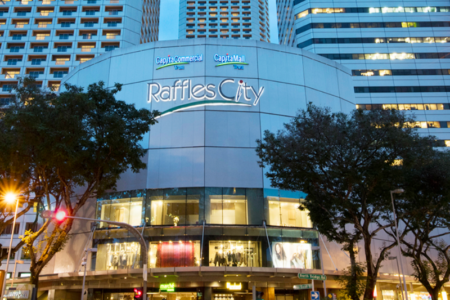
CapitaLand Integrated Commercial Trust (SGX: C38U) or CICT, and CapitaLand Ascendas REIT (SGX: A17U) or CLAR together contribute close to six per cent of the index.
Both have mostly traded at distribution per unit (DPU) yields of around 4.5 to 6 per cent over the past decade.
But growth? That’s been missing.
The pandemic has been hard on both REITs, especially CICT with its retail and office exposure.
Then rising rates stalled their recovery.
Despite the headwinds, CICT has fought back impressively — delivering 6.4 per cent annual DPU growth since its 2020 low.
CLAR? A mere 1.6 per cent.
Here’s what changes the game: falling interest rates mean lower financing costs, which flow straight to distributions.
After years of headwinds, the REITs might finally contribute meaningful growth.
As far as the STI goes, the sector is rowing in the right direction.
SGX and STE: The Dividend Promise
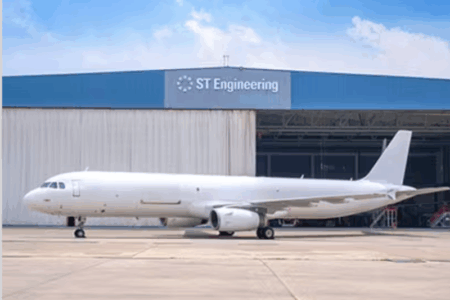
While REITs wait for interest rate relief, two companies are already making concrete promises: Singapore Exchange (SGX: S68) or SGX and Singapore Technologies Engineering (SGX: S63) or STE together account for 6.6 per cent of the index.
Here’s the thing: their historical dividend yields — 3.5 and 4.1 per cent respectively — won’t set your pulses racing.
But both companies have spelled out their dividend growth plans.
SGX is projecting its annual dividend to jump from S$0.375 in FY2025 to S$0.525 by FY2028. That’s a 40 per cent increase in three years.
Not to be outdone, STE is promising a near-six per cent dividend bump for 2025, followed by incremental increases equal to one-third of profit gains.
These are specific targets management has hung their hats on.
When companies make such public commitments, they usually have the line of sight to deliver on their promise.
That’s the kind of growth that could give the STI the push it needs to cross 10,000.
Get Smart: Dividends While You Wait
These eight companies control 70 per cent of the index. The final two?
Keppel Corporation (SGX: BN4) and Jardine Matheson (SGX: J36) control seven per cent of the index between them.
Keppel is betting on transformation – becoming a global asset manager with S$200 billion under management. Jardine Matheson is playing the portfolio game through DFI Retail (SGX: D01), HongKong Land (SGX: H02), and Jardine Cycle & Carriage (SGX: C07).
But step back from these individual stories and you’ll spot the pattern.
Every single path to STI 10,000 is paved by dividends.
The banks, telcos, REITs, even the transformation stories — they will need to reward shareholders with higher payouts over time.
In this way, the STI isn’t really a growth index. It’s a dividend machine dressed up as one.
Whether we hit 10,000 depends less on spectacular business breakthroughs and more on steady, growing distributions.
As an investor, that’s not a bad setup.
You get paid while watching this 15-year experiment unfold.
Win or lose, the dividends will keep coming.
Boost your portfolio’s returns with 5 SGX stocks that promise both stability and steady growth. We bring you the names of these rock-solid stocks, including why they could drive massive dividends over the next few years. If you’re looking to invest for retirement, this guide is a must-read. Click HERE to download now.
Follow us on Facebook, Instagram and Telegram for the latest investing news and analyses!
Disclosure: Chin Hui Leong owns shares of CICT, CLAR, DBS Group, OCBC, SGX, and UOB.