2025 is shaping up to be the year of special dividends.
A special dividend is what a company pays other than its ordinary dividends.
This should be on investors’ minds, given the extra income it generates for their portfolio.
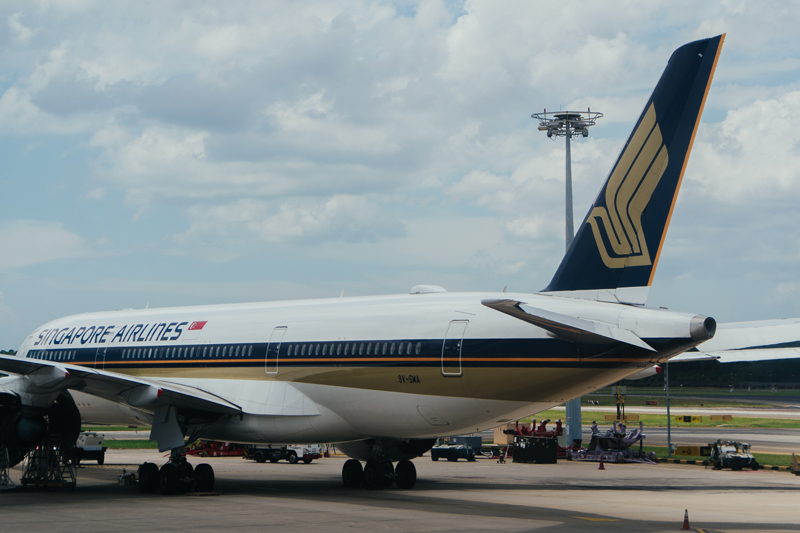
Let’s see some companies rewarding shareholders with a special dividend: Singapore Airlines (SGX: C6L), ST Engineering (SGX: S63), and Singtel (SGX: Z74).
How to Evaluate a Special Dividend: Key Considerations
A special dividend is one that is paid on a one-off basis; you should not expect a company to pay this consistently.
A special dividend is usually paid when management determines that the company’s business performance is solid moving forward, with consideration that future cash flows would be maintained or even increased.
You would also have to know if this special dividend is coming from a company’s capital reserves or if it comes from profits/cash flows.
Usually, the latter is preferred.
A company’s special dividend could also impact its forward yield, resulting in share price adjustments.
Company Snapshot & What Contributes to a 2025 Special Dividend
Now, let us examine the special dividends of the three aforementioned companies.
First up, Singapore Airlines or SIA, is a company whose business fortunes are tied to the cyclical nature of global air travel – its core business revolves around cargo and passenger volumes.
SIA’s interim special dividend of S$0.03 per share for FY25/26 could be justified, given the robust travel demand, resulting in increased cargo demand and passenger numbers.
SIA is determined to improve its margins with disciplined cost control. Additionally, the company’s built-up reserves could enable it to weather any travel slump.
SIA has a couple of cyclical risks, including the price of oil and the aforementioned slowdown in travel.
Looking at ST Engineering or STE, it is a diversified business with exposure to defence, aerospace, and the progress towards smart cities.
STE’s board has proposed a special dividend of S$0.05 per share for 2025. This special dividend is backed by STE’s strong backlog, which stood at a new high of S$32.6 billion as of 30 September 2025.
STE’s strong execution in the past has resulted in resilient cash flows. Furthermore, the company’s exposure to multiple business segments should provide some buffer against cyclical risks.
ST Engineering’s core strengths lie in the non-discretionary nature of the contracts from its defence and aerospace segments, which are likely to be renewed even during economic slowdowns.
Its main risks include project delays, higher costs, possible fluctuations in defence spending, as well as lumpy contract orders.
Finally, Singtel needs no introduction as the main telecommunications and digital services provider in Singapore.
It has so far declared a value realisation dividend of S$0.018 per share for FY2026 (financial year ending 31 March 2026), which comes from the company’s asset recycling program. The program has yielded S$5.6 billion in proceeds since its commencement in May 2024. [insert corporate action of Singtel that is directly linked to the value realisation dividend].
Singtel’s value realisation dividend is also supported by its consistent cash flows. In the first half of FY2026, Singtel’s free cash flow was S$1.4 billion, or S$0.0845 per share.
There’s also Singtel’s recurring income stream from mobile/broadband subscriptions that provides comfort for future cash flows.
Some factors that could threaten this stability would be the intense competition faced in the telecommunication industry, regulatory pressures to decrease mobile/broadband prices, and the capital expenditures required to sustain its competitive position.
What It Means for Income Investors (Now and Going Forward)
Summing up, a special dividend increases current income for investors.
However, as mentioned earlier, investors should not expect this payout to be consistent moving forward.
Special dividends are, after all, a bonus.
Investors should be mindful of balancing higher income from special dividends with their sustainability.
Its occurrence could accelerate the compounding of capital, but ordinary dividends still remain the key for one’s portfolio.
How to Position a Portfolio Around Special Dividend Payout
There are two ways to position a portfolio around special dividends.
A tactical approach is to receive the special dividend and then look to reallocate one’s position post-distribution.
A strategic approach involves holding the stock long-term, only if fundamentals hold up, to enjoy both the special and ordinary dividends.
Adopt a diversified approach and resist concentrating just on the allure of higher yields and payout for 2025.
Perhaps, you can consider the special dividend as additional capital, rather than relying on it being a guaranteed, sustained income.
What to Watch Out For — Warning Signals After Big Special Payout
Investors should pay attention to a share price adjustment following the payment of a special dividend.
Consider the business’s susceptibility to economic cycles, regulatory impacts, and competitive threats.
Find out if the special dividend is from a company’s strong cash-generating ability or whether the business is drawing from its reserves; the latter would reduce future payout.
Again, do not be mistaken with regard to the sustainability of a special dividend.
Get Smart: Do Not Think That a Special Dividend is Guaranteed
While special dividends can boost current income, you should not let them impact your main investment criteria.
Remain focused on company fundamentals – do they have strong balance sheets, and can they pay regular ordinary dividends?
These factors should remain the bedrock of a solid dividend portfolio.
It almost feels like the government is paying companies to make you wealthier. Singapore’s new S$5 billion market boost could send fresh money into local stocks. We identified 5 companies positioned to benefit, including familiar names with surprising wealth potential. Our free report reveals these hidden opportunities before the money flows in. Download it now before it’s too late.
Follow us on Facebook, Instagram and Telegram for the latest investing news and analyses!
Disclosure: Wilson. H does not own shares in any of the companies mentioned.