Something is stirring on the Singapore market, and it shows up in the buyback tally.
Over the first five months of 2026, 57 primary-listed companies bought back S$1.26 billion of their own shares on the open market.
That is a sharp step up from around S$930 million in the same period last year, and more than double the S$505 million spent two years ago.
The buying is not spread evenly.
STI stocks alone accounted for S$1.20 billion of that total.
And three blue chips did most of the heavy lifting: Singapore Telecommunications (SGX: Z74), OCBC (SGX: O39), and Keppel Ltd (SGX: BN4).
Buybacks can do useful things.
They shrink the share count, which can lift earnings per share, and they signal that management sees value in its own stock.
But for a dividend investor, the question is sharper: is the buying backed by real cash, sitting alongside a sustainable payout? Let’s look at each.
Singtel: Buybacks Alongside A Rising Dividend
Singtel was the single largest buyer by consideration over the five months.
That alone is worth a pause from a telco better known in years past for trimming payouts than expanding them.
What makes the buying credible is what sits next to it.
For the fiscal year ended 31 March 2026 (FY2026), Singtel lifted its total ordinary dividend to S$0.185 per share, up 9% year on year (YoY).
Underlying net profit climbed 12% to S$2.8 billion, with NCS operating profit surging 34% and Optus up 23%.
The core dividend works out to an 80% payout of underlying net profit.
Crucially, the capital return is funded by recycling, not borrowing.
The group sold a 0.8% stake in Airtel for S$1.5 billion, and net debt gearing improved to 23.3%.
Buybacks here are part of a wider value realisation plan, not a one-off flourish.
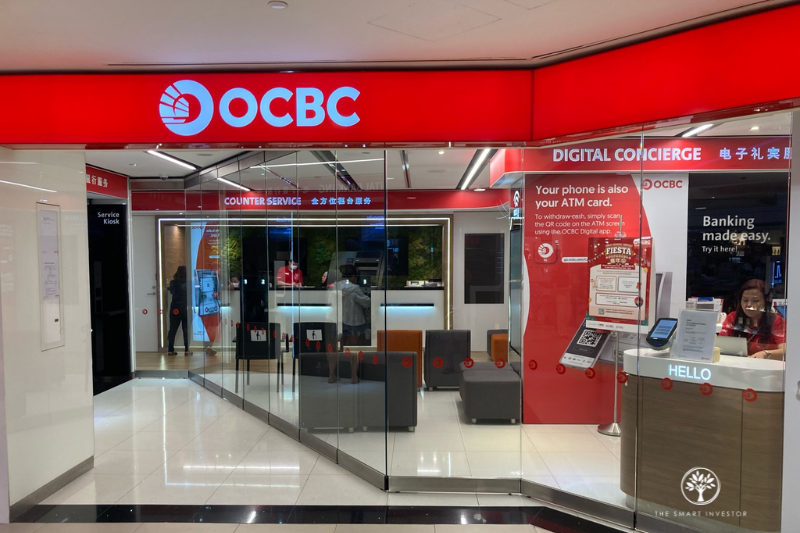
OCBC: Buying Backed by Record Income
OCBC’s repurchases sit inside a larger S$2.5 billion capital return plan running through 2026, layered on top of a guided 50% ordinary dividend payout.
The reassuring part is what funds it.
For the first quarter of 2026 (1Q2026), OCBC posted record total income of S$3.8 billion, up 5% YoY, with net profit also rising 5% to S$2.0 billion.
Net interest income slipped 5% as margins compressed 28 basis points to 1.76%, but a 9% rise in customer loans and a 23% jump in non-interest income more than cushioned the blow.
Wealth management fees alone leapt 34%.
In other words, the buybacks are paid for out of genuine earnings, not balance-sheet engineering.
Asset quality held firm too, with the non-performing loan ratio steady at 0.9% for an eighth straight quarter.
Keppel: The Same Intent, Less Disclosure
Keppel was the third-largest buyer of the three, but here the picture asks for a touch more caution.
Its first-quarter update was a voluntary one, and the group did not disclose revenue, net profit, or free cash flow figures.
New Keppel’s net profit was slightly lower year on year, as stronger Infrastructure and Connectivity earnings were offset by weaker Real Estate, which had enjoyed valuation and divestment gains a year earlier.
There are encouraging signs.
The group swung to a free cash inflow in the quarter, versus an outflow a year ago, and asset management fees rose 13% to S$108 million.
Management is targeting S$2–3 billion of non-core asset monetisation this year.
The buyback rests on that monetisation story rather than on disclosed quarterly cash generation – a thesis still being executed rather than already proven.
Get Smart: Read the Cash Behind the Buyback
A rising buyback tally is easy to cheer. But the number on its own tells you little about whether your dividends are safe.
What separates a confident buyback from a hopeful one is the cash behind it. Singtel is buying while lifting its dividend and recycling assets. OCBC is buying out of record income with a guided payout. Both are returning capital they have actually earned.
Keppel shares the same intent, but its case leans on a monetisation pipeline still in motion, with thinner quarterly disclosure to lean on. That is not a red flag – it is a reminder to keep watching the cash, not just the headline.
Free cash flow is the lifeblood of dividends.
When a company buys back its own shares and grows its payout from that same well of cash, that is a signal worth taking seriously.
When the buying rests on plans yet to be delivered, it pays to stay patient.
Looking to create a lifelong income stream? Check out our report, ‘7 Singapore Blue-Chip Stocks That Can Pay You for Life.’ We uncover a powerful lineup of dividend-paying stocks with the reliability and growth potential you need in today’s market. Don’t miss out on these dependable picks. Download your copy now and start building a secure financial future!
Follow us on Facebook, Instagram and Telegram for the latest investing news and analyses!
Disclosure: The Smart Investor owns shares of OCBC.