Something has been quietly happening to many of the most popular income stocks in Singapore.
For anyone buying today, their income proposition is not quite what it used to be.
That’s what I’ve been thinking about.
And it’s why I’ve started looking in places most investors don’t bother with.
Ten years ago, many blue-chip REITs in Singapore were yielding 6% to 7%. A good number of them now yield closer to 4% to 5%. The crowd has bid up prices, and the income has compressed.
This is what yield compression looks like in practice.
The formula is simple. Your dividend yield is just the annual payout divided by the share price. When everyone is buying the same names, the price goes up. The dividend stays flat and the yield (the income you receive per dollar invested) shrinks.
That happens because everyone found it at the same time.
The Price Has Changed But The Approach Hasn’t
I want to be careful about what I am, and am not saying here.
I am not saying blue-chip stocks have become worthless.
Many of them are still excellent businesses run by capable people. The philosophy of buying boring, stable, cash-generating companies and holding them for the long term, that hasn’t changed. I still believe in them completely. And they still deserve a place in every investor’s portfolio.
What has changed is the price you pay to sit at that table.
When the price rises faster than the dividend, you are paying more for the same income.
And when everyone crowds into the same names, the margin of safety (the cushion between what you pay and what something is worth) narrows.
It is a reason to widen your hunting ground.
Fishing in a Different Pond
This is why I have been spending more time lately looking at smaller, under-researched companies.
I look for companies where the cash flow is strong but the analyst coverage is thin.
That’s where the market hasn’t priced in the dividend potential yet.
No guarantees, but it is the kind of gap that income investors should be looking for when the obvious names have become expensive.
The Two Things I Check First
Smaller companies require more caution so before I get interested, I look at two things.
The first is free cash flow.
Smaller companies are more vulnerable to accounting quirks like depreciation schedules, one-off items, and costs that get capitalised rather than expensed. I want to see actual cash arriving at the business, and I want to understand how much of it is being returned to shareholders versus being quietly absorbed elsewhere.
The second is simplicity.
The best income stories at any size are straightforward. The company sells something people need, generates predictable cash, and has a consistent history of sharing that cash with shareholders. When I need a long explanation before the dividend thesis makes sense, I take that as a warning.
What’s Coming
I’ve been doing a lot of research into this part of the market.
I want to show you more of what I discovered, and explain more precisely how I think about building income from these overlooked parts of the market.
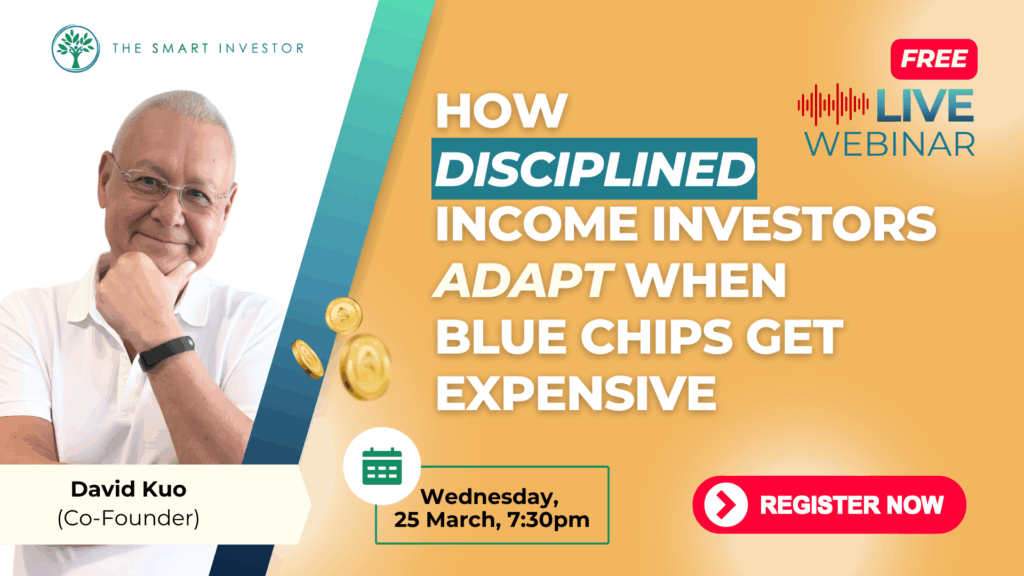
I hosted a free webinar on 25 March 2026 to reveal where I am finding income opportunities when familiar names are no longer as worthwhile as before. Keep a lookout for the webinar recording.
Wish you could overhear how experienced investors think? That’s what Get Smart feels like. Reading calm, thoughtful commentary from people who study the markets closely and care about growing wealth sensibly. Click here to subscribe to our weekly newsletter for free now!
Follow us on Facebook, Instagram and Telegram for the latest investing news and analyses!