Imagine giving a child S$10 and saying, “This came from a business you own.”
It is not pocket money. Neither is it payment for doing chores. It also isn’t a reward for finishing homework.
It came from ownership.
That one sentence can change how a child thinks about money.
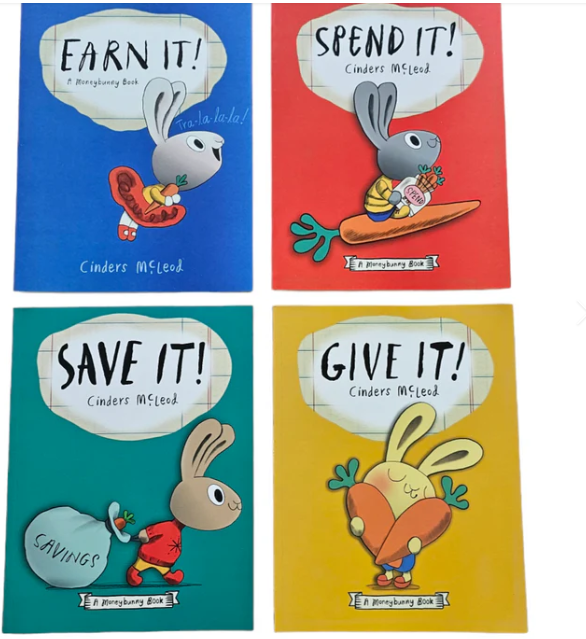
At home, we have the Money Bunny series, which introduces children to saving, spending, and investing. It is simple, colourful, and child-friendly, which is exactly why it works.
Spending is easy to see. Saving is easy to see.
But investing is harder to make real.
That is where ownership comes in.
Pocket money teaches children how to spend. Saving teaches them how to wait. But ownership teaches them how wealth is built.
That is the money lesson many of us were never taught clearly.
We learnt percentages, equations, and formulas in school. But few of us were taught what a share really means.
Not as a ticker. Not as a price that moves up and down.
But as ownership.
Truthfully, it is a lesson I wish I had understood earlier too.
And sometimes, the easiest way to explain ownership is through something as small as a S$10 dividend.
A share is a business
A share is not just a price we see on the screen.
It is a tiny piece of a real business with customers, products, costs, profits, risks, and decisions to make.
This sounds simple, but it is easy to forget when markets are noisy.
Share prices change every day. Headlines hit every hour. Markets react to inflation, interest rates, earnings, expectations, and fear.
But behind every stock is still a business trying to serve customers and earn a profit.
Start with what they know
That is why familiar companies can make useful teaching examples.
A child may not understand artificial intelligence or financial models. But they can understand a supermarket.
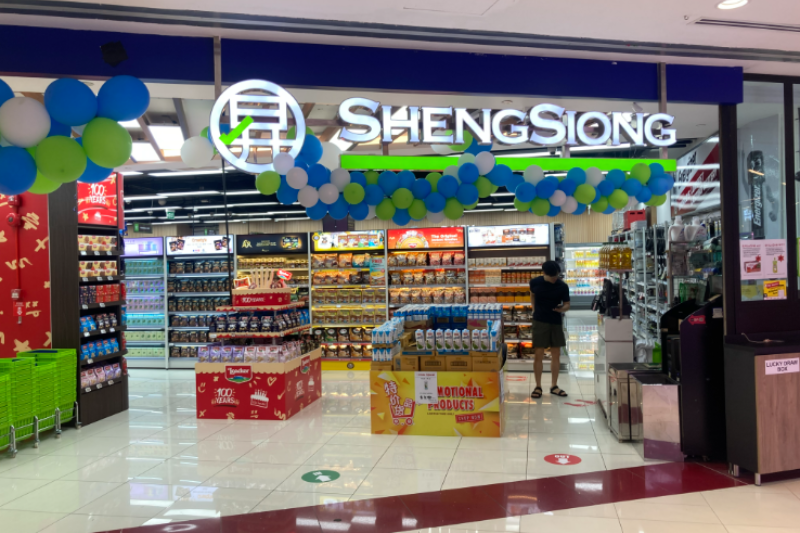
Sheng Siong Group Ltd (SGX: OV8) earns money by selling everyday items that households need.
They can understand a bank.
DBS Group Holdings Ltd (SGX: D05), Oversea-Chinese Banking Corporation Limited (SGX: O39), and United Overseas Bank Ltd (SGX: U11) help people save, borrow, pay, and invest.
They can understand a mall.
CapitaLand Integrated Commercial Trust (SGX: C38U) owns properties and collects rent from tenants.
These examples make investing feel more tangible and real.
But familiar does not mean risk-free.
A supermarket still has to manage costs. A bank still has to manage bad loans and interest rate changes. A REIT still has to manage debt, occupancy, and rental demand.
That is the second lesson: investing is not about buying companies simply because we recognise their names.
It is about understanding how they make money, what risks they face, and whether they can continue creating value over time.
The S$10 dividend lesson
A dividend is not free money.
It is part of a company’s profits being shared with its owners.
If a company pays S$0.10 per share and you own 100 shares, you receive S$10.
The maths is simple. But the lesson is not small.
That S$10 can be spent, saved, or reinvested so that money continues working.
Of course, dividends are not guaranteed. Companies can reduce, pause, or stop them if business conditions change.
That is why investing is not gambling, but it is also not guaranteed.
Get Smart: The real lesson
The real lesson is not “buy this stock”.
It is not “dividends are always good”.
And it is not “the market always goes up”.
The lesson is this: money can be saved, spent, or invested into real businesses.
And when those businesses do well over time, their owners may benefit.
That changes the conversation from “How much do I have?” to “What can this money become?”
The questions are simple enough for a child:
What does this company do?
How does it make money?
Who are its customers?
What could go wrong?
Would we still be happy to own this business many years from now?
But these are not childish questions.
They are questions every long-term investor should keep asking.
A S$10 dividend will not make anyone rich overnight.
But it can start a conversation.
Sometimes, the best investing lessons are not the most complicated ones.
They are the ones simple enough to explain to a child.
If you’ve ever asked, “But what do I do with this info?” – read Get Smart, our weekly newsletter. It helps you connect the dots, so you understand what the stories mean for your portfolio. Join thousands of investors who rely on it for steady, grounded investing ideas. Subscribe now and sharpen your insight for free.
Follow us on Facebook, Instagram and Telegram for the latest investing news and analyses!
Disclosure: Joanna Sng owns shares of all the companies mentioned