For many, the Straits Times Index (SGX: ^STI) represents businesses with strong market positions and fortress balance sheets.
But take a step outside the circle, and you will find that there are cash-rich companies which are more than capable of sustaining a dividend.
How do you go about searching for suitable candidates?
Well, Stephen R. Covey, the author of 7 Habits of Highly Effective People, once said you should “begin with the end in mind.”
For income investors, that end is a steady stream of dividends.
But dividends don’t magically appear from thin air; they are paid from a company’s cash reserves.
If that cash dries up, so does your income.
That’s why we take one step further.
A sustainable dividend is the result of a cash-generating business, ideally supported by a robust balance sheet holding more cash than debt.
That is our focus for today as we look at 3 cash-rich Singapore dividend powerhouses offering 4% yield, or more.
SBS Transit (SGX: S61)
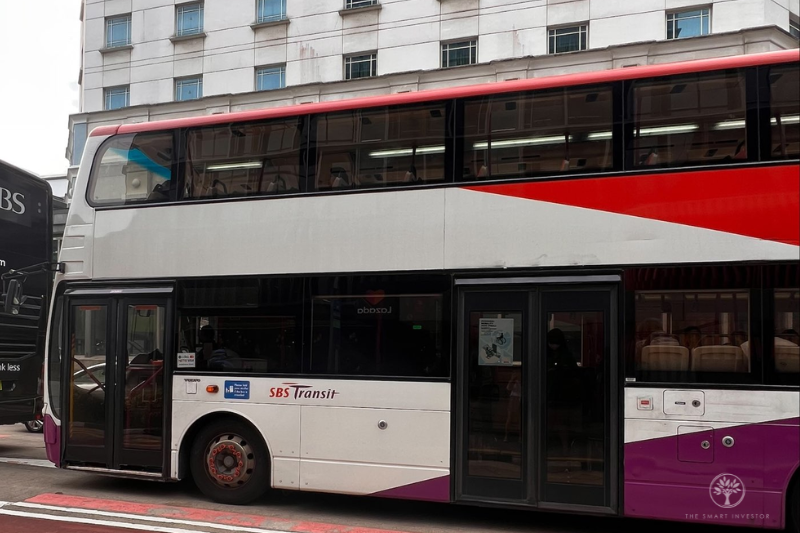
As Singapore’s largest bus and rail operator, SBS Transit boasts a strong balance sheet with S$340.8 million in cash and no debt as of 30 June 2025.
With a fleet of over 3,000 buses across 200 routes, the group also operates the North East Line, Downtown Line, and Sengkang-Punggol LRT systems.
Its two main revenue-generating segments are Public Transport Services (bus and rail operations under government contracts) and Other Commercial Services (advertising and rental income from transport facilities).
The first half of 2025 (1H2025) saw a 4.5% year-on-year (YoY) decline of its revenue to S$745.9 million, weighed down by the expiry of the Jurong West bus package on 31 August 2024, resulting in lower bus mileage.
Profit attributable to shareholders declined 7.7% YoY to S$31.1 million.
Even so, free cash flow turned positive at S$29.1 million, compared to negative S$23.8 million a year ago.
The company rewarded its shareholders with an interim dividend of S$0.0895 per share for 1H2025, up 60% from S$0.0558 a year ago.
At S$3.33, SBS Transit offers a 7.1% dividend yield, including 2024’s special dividend.
Looking ahead, rail operations revenue is expected to benefit from steady ridership growth and fare adjustments implemented in December 2024.
However, the loss of the Jurong West bus package will likely continue to impact bus operations revenue.
Similarly, SBS Transit also lost the tender for the Tampines Bus Package set to expire in July 2026, dealing another blow to its local bus revenue.
VICOM (SGX: WJP)
VICOM, which stands for “Vehicle Inspection Company”, is a leading provider of vehicle inspection and technical testing services in Singapore.
Backed by parent company ComfortDelGro Corporation Limited (SGX: C52), the group commanded almost 73% market share in the vehicle inspection sector for 2024, ensuring compliance with safety and environmental standards through mandatory vehicle inspections.
Beyond vehicles, VICOM also offers non-destructive, mechanical, and biochemical testing, as well as calibration services for industries such as manufacturing and construction.
As of 30 June 2025, the company maintained a debt-free balance sheet with S$55.6 million in cash.
Revenue jumped 24.1% YoY to nearly S$70 million, driven by the ongoing Electronic Road Pricing 2.0 On-Board Unit (OBU) installation project and increased testing volumes from the manufacturing and construction sectors.
This strong top-line growth made its way to the bottom line, with profit attributable to shareholders rising 10.2% YoY to S$15.6 million.
Operating cash flow remained at a healthy S$19.3 million, though free cash flow declined to S$6.0 million from S$10.0 million a year ago due to higher capital expenditure of S$13.3 million.
The spending is tied to the new Jalan Papan integrated testing centre, slated to be operational in the first half of 2026.
The board declared an interim dividend of S$0.031 per share, representing a 10.7% increase from the S$0.028 paid a year ago.
At the current share price of S$1.62, this translates to a trailing yield of nearly 4%.
Demand for vehicle testing is expected to remain strong with the OBU installation in full swing.
However, management cautioned on increased uncertainty from potential US tariffs, which may impact the manufacturing sector and overall economy, and in turn,affect non-vehicle testing demand.
Food Empire (SGX: F03)
Food Empire Holdings differs from VICOM and SBS Transit in that, unlike the latter two, it has debt.
Yet, the company maintained a healthy balance sheet with cash of US$135.3 million against total debt of US$91.3 million, leaving it with a net cash position of US$44 million as at 30 June 2025.
A global food and beverage manufacturer, Food Empire operates in over 60 countries with nine manufacturing facilities across six countries.
Its portfolio comprises instant beverages, including its flagship MacCoffee brand, along with snack foods and food ingredients.
Two key markets contributed to its robust 1H2025 results, which saw an increase of nearly 22% YoY in revenue to over US$274 million, aided by strong double-digit growth across its four core segments.
Revenue in Vietnam surged 25.3% YoY to US$77.5 million, maintaining its position as the fastest-growing market in Southeast Asia.
Russia, Food Empire’s largest segment, brought in US$82.8 million, up 21.6% from a year ago, supported by price gains and ruble appreciation.
Despite a net loss of US$1.5 million from a one-off, non-cash fair value loss of US$32.6 million on redeemable exchangeable notes, normalised net profit actually rose 35.7% YoY to US$31.5 million.
Free cash flow in 1H2025 swung positive to US$20.5 million, from negative US$15.9 million a year ago, demonstrating better working capital management.
With that, shareholders were rewarded with an interim dividend of S$0.03 per share, compared to none in the previous year.
This gives Food Empire shares a dividend yield of 4.1% (including special dividends) at the current stock price of S$2.69.
The outlook remains bright as sustained growth momentum is expected through brand-building, product development, and vertical integration projects.
Other key projects that would help pave the road ahead include the completion of Kazakhstan’s first coffee-mix manufacturing facility by end-2025, the expansion of India’s spray-dried facility by 60% by 2027, and a new freeze-dried coffee facility in Vietnam by 2028.
Get Smart: Building Dividend Income Beyond the STI
It’s normal for investors to look to the STI for dependable dividend plays, but opportunities exist beyond the familiar blue chips.
Companies like SBS Transit, VICOM, and Food Empire show that strong cash positions and disciplined capital management can support attractive yields.
The lesson is clear: dividends are only as sustainable as the cash flows behind them.
The key to lasting dividend income is to focus on businesses with resilient balance sheets and the ability to generate steady cash.
When the market is unpredictable, where can you park your money with confidence? Our latest FREE report reveals 5 Singapore dividend-payers built to withstand global storms. Get it now and see what’s still worth holding.
Follow us on Facebook, Instagram and Telegram for the latest investing news and analyses!
Disclosure: The Smart Investor does not own any shares of the companies mentioned in this article.