As PM Lawrence Wong mentioned recently, Singapore isn’t trying to outdo leading American frontier models such as those from OpenAI and Anthropic.
Does this mean Singapore is willingly letting the global AI race slip by?
Not at all.
Here’s the thing: AI isn’t just about frontier models; it’s also an enormous ecosystem spanning multiple industries.
For frontier models to scale their usefulness, they need an entire hardware ecosystem to back them up.
From massive AI compute, to reliable power, advanced chip testing, and precision-engineered equipment, these are the supporting roles that Singapore can offer.
They also ensure Singapore’s growth remains connected to the AI secular tailwind – by feeding the AI titans that make these headline-grabbing technologies possible.
AEM Holdings (SGX: AWX): The Gatekeeper of High-Performance Silicon Viability
Advanced AI chips can only unleash their full capabilities when they are deployed reliably under real world constraints.
This is because having to tear down underperforming AI chips is costly and highly disruptive to businesses.
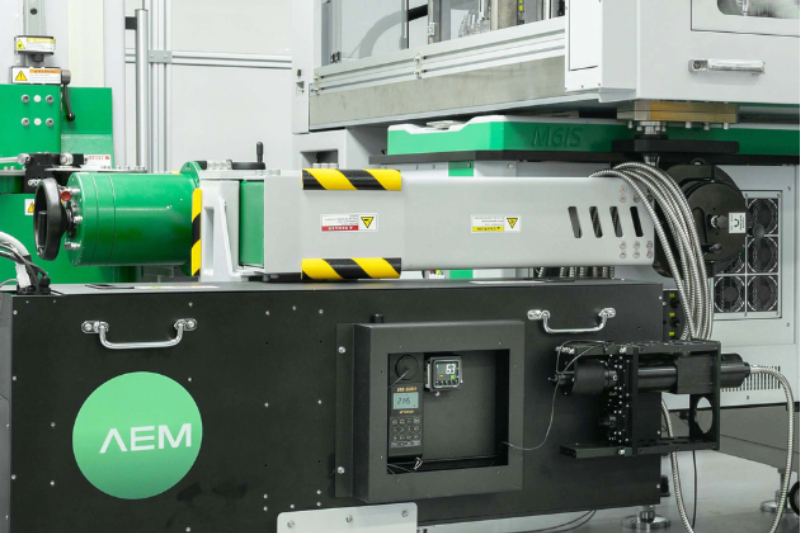
AEM helps prevent such disruptive outcomes with its advanced testing capabilities that go beyond structural and functional testing of semiconductor chips, into system-level testing.
In 2025, AEM’s revenue increased 5% to S$399.3 million, driving profit before tax up 51% to S$21.3 million, supported by the ramp-up to high-volume manufacturing by its major AI/High-Performance Computing customers.
Crucially, AEM possesses additional strength in advanced thermal technologies that can maintain constant temperatures under testing.
This is something that’s critical for testing-accuracy, yet competitors struggle to get right.
For bigger clients, the best part is arguably AEM’s capability to provide end-to-end testing solutions, saving clients the trouble of having to stitch together testing results from multiple vendors.
Sembcorp Industries (SGX: U96): Fuelling the Insatiable Appetite of the Digital Grid
AI needs smart chips, which are incredibly power-hungry.
In fact, AI consumes so much power that it shifts the bottleneck of large-scale data centre buildouts from physical space to AI-scale energy demand.
The good news is that this shift benefits power generation businesses such as Sembcorp Industries.
With a portfolio that accounts for one-third of the power needs of Singapore’s data centres, Sembcorp Industries is a key power utility backbone providing reliable, high-capacity energy supplies to the country.
Sembcorp Industries’ revenue was down 10% to S$5.80 billion in 2025, which drove net income lower by 4% to S$984 million.
Lower contributions from the company’s Gas and Related Services segment were the main culprit, and it more than offset growth from the Renewables segment.
Crucially, the energy company is not just about power generation – it also wants to make it clean and sustainable, through the advancement of low-carbon technologies such as the 600MW hydrogen-ready project slated for completion in the fourth quarter of 2026.
UMS Integration (SGX: 558): The Precision Components Behind Chip-Fabrication Giants
UMS supplies critical precision components used by Applied Materials (NASDAQ: AMAT) to build advanced chip fabrication equipment.
The chip fabrication equipment in turn enables foundries such as Taiwan Semiconductor Manufacturing Company (NYSE: TSM), or TSMC, to manufacture next-generation AI chips such as the highly sought-after GPUs designed by NVIDIA (NASDAQ: NVDA).
In 2025, UMS’s revenue grew 4% to S$251.1 million, while net profit was up 5% to S$43.6 million, driven by AI-related demand for semiconductor components.
With analysts estimating around 80% of UMS’s revenue coming from Applied Materials, UMS is effectively feeding one of America’s most notable materials engineering companies, known for delivering energy-efficient compute as nodes shrank to ultra-small, angstrom-scale sizes.
Still, while having most of its revenue from a notable company allows UMS to benefit from its growth, it also presents significant concentration risk that investors should not ignore.
With MAS’s Equity Market Development Programme (EQDP), its Bursa Malaysia secondary listing, and inclusion in the SGX iEdge Next 50 Index, UMS is expected to benefit from the increased market visibility and investor interest.
Get Smart: The Critical Infrastructure Powering Global AI
Although Singapore isn’t home to companies developing the latest frontier models, our country still rides the AI wave with businesses that support global companies that do.
Leading foundries depend on Applied Materials’ wafer fabrication tools to manufacture highly complex AI chips, and these tools are equipped with UMS’s precision parts.
These complex but delicate chips are vulnerable to manufacturing defects.
AEM, with its rigorous end-to-end testing solution, ensures large-scale, data-centre deployments of these cutting-edge AI chips can be done without compromising on quality.
AI-heavy data centres need reliable power supplies to operate at scale – lots of it.
With one-third of Singapore’s data centres powered by Sembcorp, it’s a key provider of high-capacity energy supply at round-the-clock availability.
Quietly supporting the AI titans behind the scenes, these local businesses support the AI boom and, in return, benefit immensely from their growth.
Not all AI “winners” will survive this cycle.
But a few companies already have the scale, cash flow, and edge to pull ahead. We highlight what to look for in our FREE volatile market report. Download it here.
Follow us on Facebook, Instagram and Telegram for the latest investing news and analyses!
Disclaimer: Larry L. owns shares of NVIDIA.