The SPDR STI ETF (SGX: ES3) tracks Singapore’s 30 largest listed companies.
It returned 13.1% in the first half of 2026.
That is a respectable number.
Three names outside the index still left it far behind.
MoneyMax Financial Services Ltd (SGX: 5WJ), Oiltek International Ltd (SGX: HQU), and ISDN Holdings Ltd (SGX: I07) each more than doubled over the same six months.
None sits in the Straits Times Index (SGX: ^STI).
All three belong to Singapore’s small and mid-cap universe, where trading activity and institutional interest in that segment picked up sharply in the first half.
What did investors see in these three?
What did Oiltek do to earn a second look?
Oiltek supplies process technology to the global vegetable oils industry, and it has commissioned plants in more than 37 countries.
Its FY2025 numbers favour quality over headline growth.
Revenue fell 8.2% year on year (YoY) to RM211.4 million as large refinery projects in Indonesia and Africa wound down.
Net profit still rose 7.9% to RM32.0 million, and the margins explain why.
Gross margin widened from 23.9% to 32.5%, helped by cost savings on refinery work and a renewable energy segment that turned profitable.
Free cash flow (FCF) swung from negative RM12.4 million to positive RM14.0 million as the group collected milestone billings.
It closed the year with RM99.7 million in cash and no borrowings.
The board raised the total dividend to S$0.012 per share, a 33.3% increase on a post-bonus adjusted basis.
Oiltek’s FCF turned positive at the same time the payout rose.
Investors may have read that as a business improving in quality, not just size.
Why did MoneyMax post the biggest return of the three?
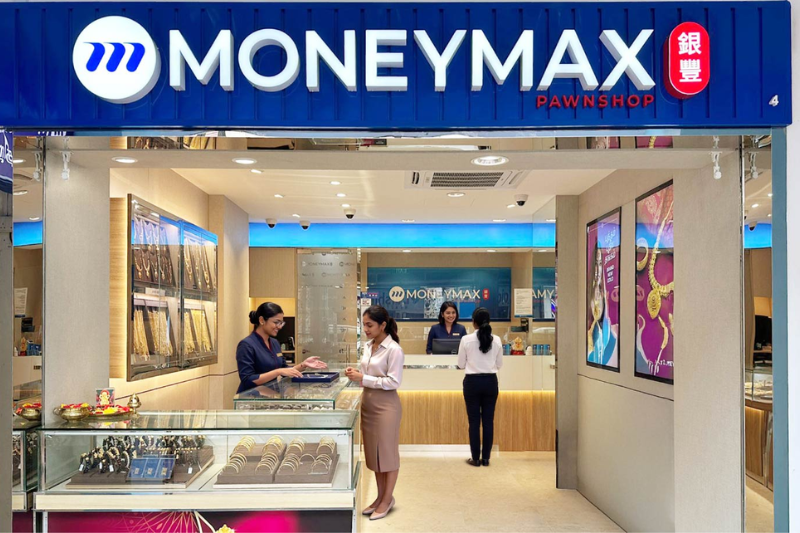
MoneyMax runs pawnbroking, retail and trading of gold and luxury items, and secured lending across Singapore and Malaysia.
Its FY2025 growth was the strongest of the group.
Revenue climbed 38.9% YoY to S$541.9 million.
Profit attributable to owners jumped 87.6% to S$71.7 million.
Higher gold and luxury sales drove it, alongside a larger pawnbroking receivables book and favourable gold prices.
Rising gold prices tend to lift both sides of a pawnbroking business at once; investors may have priced that tailwind in.
The cash flow holds the nuance.
FCF came in at negative S$179.6 million, wider than the prior year’s negative S$73.2 million, as the group ploughed working capital into expansion.
Cash and equivalents stood at S$28.4 million against total borrowings of S$868.6 million, up from S$630.9 million.
This business funds growth with debt.
The returns reward that only while expansion keeps paying off.
The board recommended a final dividend of S$0.015 per share plus a special dividend of S$0.005, together S$0.020, against S$0.014 a year earlier.
The two components read differently.
A special dividend is discretionary and may not repeat.
Was ISDN’s profit drop as bad as it looked?
An Asian industrial automation firm dual-listed in Singapore and Hong Kong, ISDN’s renewable energy arm builds mini-hydropower plants in Indonesia.
The headline looked weak.
FY2025 revenue rose 18.2% YoY to S$440.2 million, yet profit attributable to owners fell 20.7% to S$6.8 million.
The fall was almost entirely non-cash.
Strip out S$4.5 million of unrealised foreign exchange losses on long-dated renewable energy receivables, and core profit grew 25.9% to S$9.7 million.
FCF rose to S$14.7 million from S$10.9 million.
The group held S$68.1 million in cash against S$76.7 million in borrowings, a modest net debt position.
ISDN raised its final dividend to 0.53 Singapore cents per share from 0.47 cents, a payout set at 25% of core profit.
It targets two more hydropower plants for completion in 2026, which would lift capacity by 81.3%.
Investors willing to look past the reported figure to the core number would have seen a business still growing.
What connects the three?
None of these gains happened in isolation.
Trading in Singapore’s small and mid-cap segment strengthened across three consecutive half-year periods, and institutional buyers turned more active.
All three companies rank among the SMIDs that drew the heaviest net institutional inflow relative to their size in the first half.
Money followed the improving numbers.
Each still carries a different risk.
Oiltek depends on project timing and a stronger ringgit, while MoneyMax is expanding on a rising debt load.
ISDN’s reported earnings stay exposed to currency swings on its hydropower receivables.
Get Smart: Look Deeper Than Just Doubling Prices.
A doubling share price and a sound business are not the same thing.
Two of these three grew their dividends while their cash generation improved.
One grew its return while its free cash flow went further into the red.
The numbers reward a closer look before the price does.
You walk past million-dollar opportunities every single day. Your coffee shop. Your commute. Your grocery run. But these “boring” Singapore companies are quietly building fortunes while everyone chases crypto and overpriced tech stocks. Our latest report reveals 5 small-cap goldmines hiding in plain sight. Click here to download for free now before prices catch up.
Follow us on Facebook, Instagram and Telegram for the latest investing news and analyses!
Disclosure: Calvina L. does not own shares of any companies mentioned. Chin Hui Leong contributed to the article and does not own shares of any companies mentioned.