

Does your wallet feel lighter than it’s supposed to?
If so, you are not hallucinating.
The latest energy shock presents a new reality that is hard to ignore.
Geopolitical tensions in early 2026 sent Brent crude oil prices skyrocketing above US$100 per barrel and have hovered around this price level.
A double-whammy ensues – with an erosion of purchasing power for retirees and an uncertain prospect for income investors’ dividend portfolio.
The Lag: Why the Worst is Only Beginning to Unfold
It’s no secret that Singapore imports almost all its essential resources, from sand for land reclamation to natural gas for power generation.
Here’s the hard truth: 95% of the city-state’s electricity is powered by imported natural gas.
But wait, are we not talking about rising oil prices?
Here’s the thing: natural gas prices are indexed to oil prices but lag it by several months.
That’s why, despite oil prices already surging in February this year, the full force of the price hikes are expected to hit your electricity bill in July through September – the third quarter of 2026.
These tariff hikes, reportedly the “highest to date”, imply significant consequences for Singapore households.
A household living in a four-room HDB will need to fork out about an additional S$20 per month just to keep the lights on.
For perspective, that’s comparable to a standard Netflix (NASDAQ: NFLX) subscription.
That’s not all.
With inflation creeping up in May this year, retirees are forking out more for common goods such as coffee, food, and personal care products.
Still, it’s not all doom and gloom even in an environment of rising oil prices.
Some businesses thrive.
For the income investor, the key is to sort the winners from the losers.
The Winners
Sembcorp Industries (SGX: U96): Having locked in about 79% of its Singapore gas-fired power portfolio into long-term contracts of at least five years, Sembcorp’s long-term earnings visibility is significant, despite near-term margin compressions in its Gas and Related Services segment.
Moreover, it’s benefiting from the energy-intensive demands of the digital economy, having secured a 150MW contract from Micron (NASDAQ: MU).
DBS Group (SGX: D05): With wealth management fees hitting new highs, it provides an enviable non-interest income engine to guard against potential interest rate headwinds for the World’s Best Private Bank.
Its corporate treasury segment also benefits from the volatility by selling more hedging products.
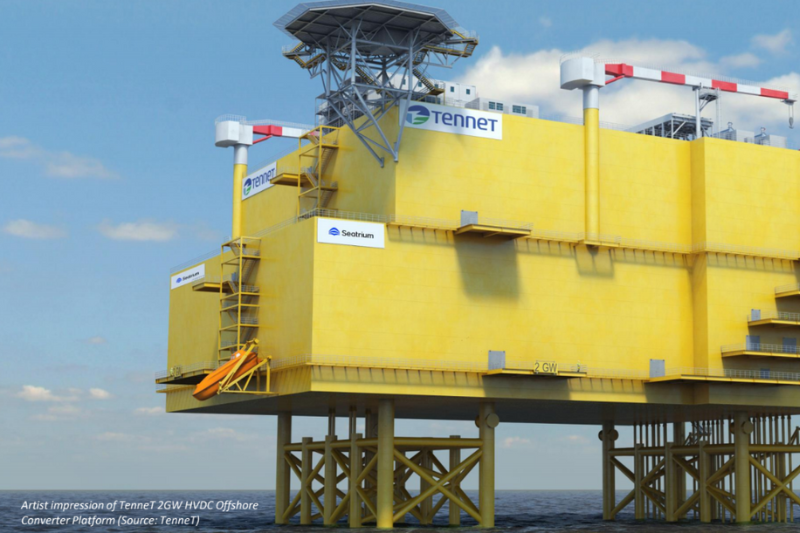
Seatrium (SGX: 5E2): High oil prices are providing a highly supportive environment for the offshore energy specialist.
This is evident in the group’s massive S$15.5 billion net order book slated for deliveries all the way to 2033.
The Losers
Singapore Airlines (SGX: C6L), or SIA: With jet prices accounting for close to one-third of SIA’s operating costs, it’s hardly surprising that SIA is one of the clearest losers as fuel prices more than doubled in early 2026.
Crucially, we have not seen the worst of SIA, as the group’s already high fuel prices are priced on a lag.
SATS (SGX: S58): While the aviation solutions provider achieved revenue growth of 9.8% to S$1.62 billion for the fourth quarter ended 31 March 2026 (FY2026), EBITDA grew just 3.9% to S$267.5 million, due to the Middle East conflict – a squeeze on margins even as net profit rose 31%.
With the surge in energy prices continuing to affect its input costs, it adds a material layer of uncertainty for its growth outlook, which income investors should be cautious of.
A Growing Yield Matters More Than Absolute Yield
If a portfolio provides a static 5% yield, an inflation of 2% means the effective yield is just 3%.
Hence, for a retiree fighting the flare-up of inflation, it’s not just about preserving capital – the ability to uphold their purchasing power becomes just as important.
To this end, they need to prioritise dividend yield growth over absolute yield.
Firms like DBS and Sembcorp, with their proven track record of rising dividends backed by their defensive businesses, could potentially preserve retirees’ purchasing power with more cash on hand as spending rises.
Quality REITs like CapitaLand Integrated Commercial Trust (SGX: C38U), or CICT, could also be a useful addition to retirees’ income portfolio.
Not only does CICT boast a historically rising distribution payout, but its fully green-rated portfolio effectively minimises the impacts from rising electricity tariffs.
Get Smart: Fortify Your Golden Years
Against notoriously cyclical global oil markets, waiting for them to normalise isn’t wise for retirees.
Crises don’t last forever.
However, instead of passively waiting for light at the end of the tunnel, retirees will do better by actively fortifying their portfolio.
Strategically pivot away from fuel-heavy sectors like aviation to guard against the downside of rising energy costs.
Meanwhile, double down on high-quality defensive enterprises and REITs with rising dividends and distributions to uphold your purchasing power.
2008. 2020. 2022. Three of the toughest stretches for Singapore markets in a generation. We found 6 SGX companies that paid a dividend every single year through all three. Our free report reveals the six companies and what allowed them to keep paying when others couldn’t. Click here to download now.
Follow us on Facebook, Instagram and Telegram for the latest investing news and analyses!
Disclaimer: Larry L. owns shares of CICT and DBS.


