A dividend increase is easy to announce.
Paying for it is harder.
The test is whether the cash behind the payout is growing too.
A higher dividend funded by a shrinking cash pile tells a different story from one backed by rising free cash flow.
Three SGX-listed companies raised their dividends in their latest results.
All three sit in a net cash position, meaning their cash comfortably exceeds their borrowings.
But the quality of each raise differs.
Here they are, the strongest cash case first.
Which company funded its raise from rising cash?
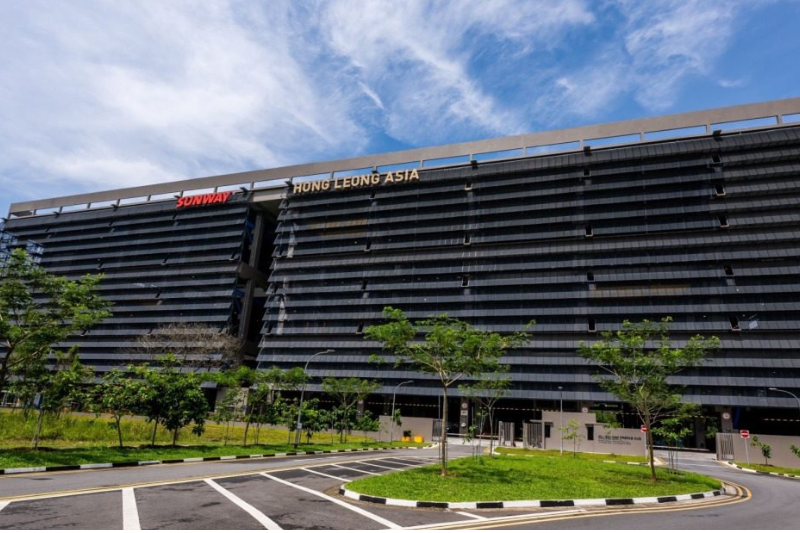
Hong Leong Asia (SGX: H22) is an investment holding company with two main units.
Yuchai makes engines and brings in around 86% of group revenue, while the building materials arm produces cement, concrete and quarry products.
The balance sheet did the heavy lifting here.
Cash and short-term deposits rose to S$1.6 billion, up from S$1.4 billion a year ago.
Total loans and borrowings fell to S$757.4 million from S$873.9 million.
Cash went up while debt came down, leaving the group in a clear net cash position.
The dividend followed the cash.
Hong Leong Asia doubled its interim dividend to S$0.02 per share and held its final dividend at S$0.03.
Total ordinary dividends rose to S$0.05 from S$0.04 a year ago.
No special dividends were declared, so the increase is recurring rather than a one-off top-up.
What makes this raise stand out is the free cash flow (FCF) behind it.
FCF more than doubled to roughly S$450.5 million, against S$170.9 million a year ago.
The dividend went up because the cash generation went up.
Revenue rose 22.0% year on year (YoY) and profit climbed 28.5%, led by stronger engine sales at Yuchai.
That growth is what fed the cash.
Can a bigger raise rest on a smaller cash flow?
SIA Engineering Company (SGX: S59), or SIAEC, is a maintenance, repair and overhaul specialist serving airlines across Asia-Pacific.
Its balance sheet is the cleanest of the three.
SIAEC held S$564.8 million in cash against just S$5.4 million in borrowings, excluding lease liabilities.
That leaves a net cash position of S$559.4 million, with borrowings barely registering.
SIAEC also delivered the largest raise of the group – total dividends for the year reached S$0.11, up 22.2% from S$0.09 a year ago.
Here, the cash picture is more complicated.
FCF turned negative at S$10.6 million, against a positive S$114.1 million a year ago.
A S$63.5 million build-up in contract assets pulled the figure below zero.
So SIAEC raised its dividend in a year when free cash flow did not cover it.
The net cash buffer makes that affordable for now – that is the line to watch.
There is one more point on earnings quality.
Net profit rose 21% to S$168.9 million, but much of that came from associates and joint ventures, which contributed S$145.3 million.
The core business matters less to the headline profit than the partnerships do.
What does an 84% payout tell us?
Raffles Medical Group (SGX: BSL), or RMG, runs four hospitals and over 100 clinics across Singapore, China, Vietnam, Cambodia and Japan.
The group holds a net cash position of S$261.1 million, made up of S$310.8 million in cash against S$49.7 million in borrowings.
It carries the most debt of the three, though cash still covers it several times over.
The group raised its proposed final dividend to S$0.030 per share, a 20% increase from S$0.025.
That payout represents 84% of sustainable PATMI.
The raise is real, but the cushion is thinner than the others here.
FCF jumped 39.7% to S$91.3 million.
Read the reason carefully: the improvement came partly from significantly lower capital expenditure, not only from higher earnings.
A lighter spending year flatters free cash flow; capex can normalise.
Revenue rose just 1.8% to S$765.3 million, the slowest top-line growth of the three.
Profit climbed 13.4% to S$70.6 million, though a S$4.7 million fair value gain on investment properties lifted that figure.
Strip out the one-off and the operating picture is steadier than the headline.
Get Smart: A raise is only as good as the cash behind it
All three companies did the same thing.
They raised dividends while sitting on net cash.
The difference is in the funding.
Hong Leong Asia’s raise rode a doubling in free cash flow, while SIAEC’s leaned on the balance sheet rather than the year’s cash.
RMG’s was real but tightly covered and helped by low capex.
Watch the cash, not just the dividend.
We’ve found 5 SGX-listed dividend stocks with strong track records in turbulent markets. If you want consistency in an uncertain world, start here.
Follow us on Facebook, Instagram and Telegram for the latest investing news and analyses!
Disclosure: The Smart Investor owns shares of RMG.