Genting Singapore (SGX: G13) has not traded this low in 10 years.
That is an odd place for a company to be.
It carries no debt. It sits on billions in cash. And it still pays a dividend.
So what is dragging the shares down? And if you are buying for the income, can you trust the payout to hold?
Let us take it apart.
Why the shares are languishing
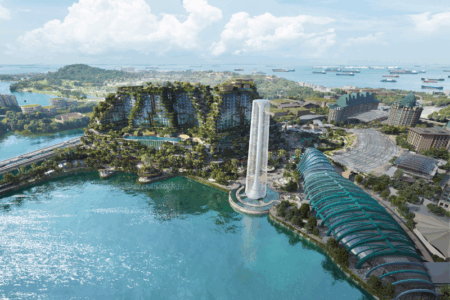
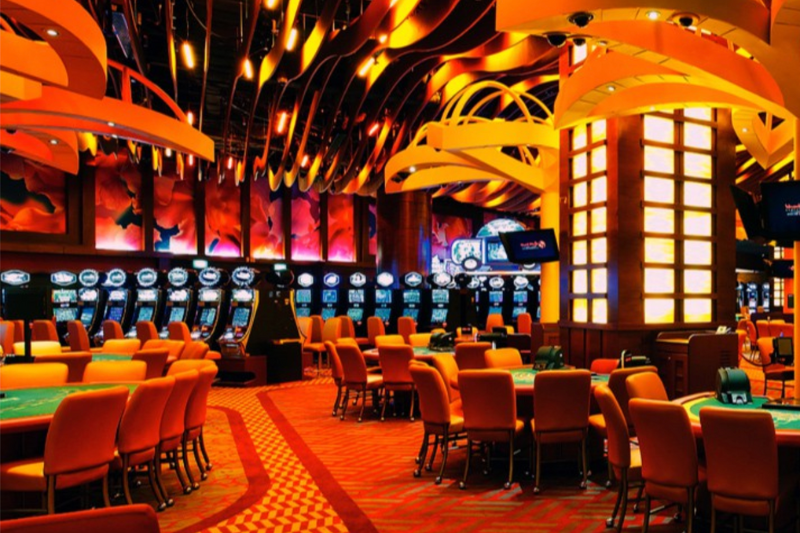
Genting Singapore owns and runs Resorts World Sentosa (RWS). That is Universal Studios Singapore, the Singapore Oceanarium, six hotels, and one of the two casinos licensed in Singapore.
The money comes in through two doors: gaming and non-gaming.
The bigger door has narrowed.
For the full year ended 31 December 2025 (FY2025), revenue slipped 3.1% year on year (YoY) to S$2.5 billion. Gaming revenue did the damage, falling 5.8% to S$1.6 billion on a lower win rate. Non-gaming held up better, rising 1.9% to S$832.3 million as the refreshed attractions pulled guests back in the second half.
Net profit fared worse. It dropped 32.6% YoY to S$390.3 million.
A few things weighed on it at once: the cost of ramping up new launches, the cost of temporary closures during the asset refresh, lower interest income as rates came down, and fair value losses on portfolio investments.
Adjusted EBITDA fell 15.0% to S$815.8 million.
The first look at 2026 did not change the mood.
For the first quarter (1Q2026), revenue dipped 3% YoY to S$607.6 million. Gaming fell again, down 8% to S$403.4 million. Non-gaming did the lifting once more, up 8% to S$204.1 million on stronger visits to Universal Studios and the Oceanarium.
Management said gaming picked up towards the end of the quarter. But they also pointed to trouble outside their control: conflict in the Middle East and wider geopolitics have raised supply-chain costs and pushed airfares up, which crimps travel demand.
So this is a business in transition, with profit falling faster than sales. No wonder the market is cautious.
The case for the dividend
Now the other side of the story.
Genting held its FY2025 dividend at S$0.04 per share — a S$0.02 interim and a proposed S$0.02 final. That is flat on the year before, even as profit shrank by a third.
With the shares near a decade low, a flat dividend lifts the yield. It works out to around 6.6%. For comparison, your CPF Ordinary Account pays 2.5%.
A fat yield that comes from a falling share price is never something to take at face value. So here is the real question: is this dividend paid for by the business, or by something else?
Can the dividend be sustained?
Free cash flow is the lifeblood of dividends. Start there.
In FY2025, free cash flow came in at S$211.3 million. That is down 51.7% YoY. The drop was by choice, not by accident: capital expenditure jumped 36.9% to S$578.7 million to fund the RWS 2.0 transformation.
Now hold that against the payout.
The S$0.04 dividend cost Genting more than it earned in net profit last year. It also cost more than the free cash flow the business produced. By either measure, FY2025’s dividend was not paid for out of the year’s own cash.
That should set off alarm bells. Then you look at the balance sheet.
Genting has no debt. It held S$3.2 billion in cash as at 31 December 2025.
That cash is the bridge. A pile that size can carry a year – or a few years – where investment runs ahead of cash flow, and the dividend never feels the strain. It is the line between a payout that is in trouble and one that is simply being topped up while the company builds.
But a bridge is not the destination. The capex from RWS 2.0 should ease in time. Gaming has to recover for free cash flow to cover the dividend on its own again. The cash buys time. It does not replace earning the money.
Get Smart: A strong foundation, not a finished one
For now, the S$0.04 dividend looks safe. Not because the business is humming, but because a debt-free balance sheet and S$3.2 billion in cash are carrying it while RWS 2.0 runs its course.
That is a strong place to stand. Few companies could pay out more than they generate and barely feel it.
But standing strong is not the same as moving forward. The question is not whether Genting can afford this year’s dividend. It clearly can. The question is whether gaming recovers and the spending eases before the cash has to keep filling the gap.
So watch three things: the win rate, capex coming down, and free cash flow climbing back above the dividend. Line those up, and the 6.6% yield stops being a worry and starts being a reward.
A market dip can either hurt your returns… or accelerate them.
The difference comes down to one thing: how you deploy your cash. We break it down step by step in this FREE report. Get your copy for free now.
Follow us on Facebook, Instagram and Telegram for the latest investing news and analyses!
Disclosure: The Smart Investor does not own shares of any companies mentioned.