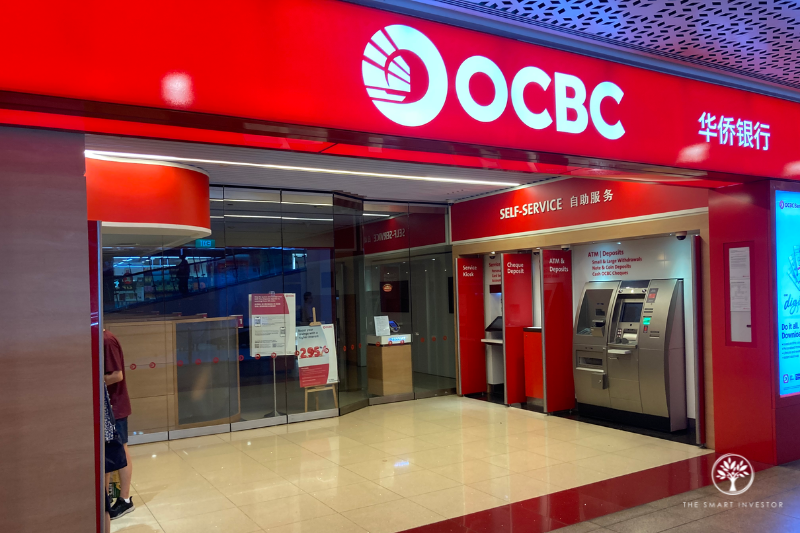
Oversea-Chinese Banking Corporation Limited (SGX: O39), or OCBC, is set to release its first-quarter 2026 (1Q2026) results on 8 May 2026, and fellow investors have good reason to pay attention.
The bank’s FY2025 numbers told a story of two halves pulling in opposite directions – net interest margin (NIM) compressing sharply even as fees, trading, and insurance income hit record levels.
Management has since laid out a FY2026 playbook that leans more heavily on the latter.
The upcoming Q1 release is the first data point against that plan, and the first read on whether the S$0.99 per share paid out last year still sits on firm footing.
Net interest margin: is the floor in sight?
The anchor metric to watch is NIM, which compressed by 29 basis points to 1.91% in FY2025, with asset yields repricing faster than funding costs.
That pressure pulled net interest income (NII) down 6% year on year (YoY) to S$9.2 billion, partially offset by a 9% rise in customer loans in constant currency terms to S$341 billion.
For FY2026, management has guided for NII to decline slight-to-moderately.
The Q1 NIM print will reveal the slope of that decline.
A stabilising margin would suggest the worst of the rate transmission lag is behind the bank.
A further meaningful step-down would extend the pressure on OCBC’s largest income stream well into the year.
Non-interest income: record or high watermark?
The offset, and arguably the bigger structural story, is non-interest income.
In FY2025 it surged 16% YoY to S$5.5 billion, with record prints across all three engines.
Net fee income climbed 22% to S$2.4 billion, with wealth management fees alone jumping 33%.
Net trading income rose 10% to S$1.7 billion on record customer flow, while insurance income from Great Eastern Holdings Limited (SGX: G07) grew 17% to S$1.1 billion.
Wealth management now accounts for 38% of total income, up from 34% a year ago.
Under the “Next Frontier” corporate strategy, Q1 will show whether that momentum extends into 2026 – and whether FY2025’s record was a starting line or a high watermark.
Loan growth: from 9% to mid-single digits
Loan growth is the third thread worth pulling.
FY2025’s 9% YoY increase in customer loans in constant currency was a sizable tailwind that cushioned the NIM squeeze.
Management has guided for mid-single-digit loan growth in FY2026 – a meaningful step down from last year’s pace.
Q1 will indicate whether the deceleration is orderly or abrupt.
An orderly moderation paired with stable credit costs is the ideal reading for a bank navigating a softer rate environment.
A sharper pullback would compound the NII pressure and force management to lean even harder on non-interest income to keep total income stable to growing, as guided.
Asset quality and the capital return runway
Finally, asset quality and capital discipline.
The non-performing loan (NPL) ratio held steady at 0.9% for seven consecutive quarters, a quiet but meaningful marker of underwriting discipline.
Management has guided credit costs of 20-25 basis points for FY2026.
Any uptick in NPLs or allowances in Q1 would be the first crack in that clean story.
On capital, the S$2.5 billion capital return plan is targeted for completion by FY2026, and the ordinary payout ratio has been set at 50%.
OCBC does not typically declare a dividend with Q1 results, but commentary on the capital return runway will matter for shareholders.
Get Smart: Reading the dividend engine
OCBC’s FY2025 total dividend of S$0.99 per share – made up of interim, final and special components at a 60% payout ratio – was funded by both engines of the bank firing at once: a still-sizeable NII base and a record-setting non-interest income print.
FY2026 will almost certainly lean more heavily on fees, wealth, trading and insurance to do the heavy lifting.
The 8 May release is the first real test of whether both cylinders keep firing as the rate cycle turns.
For dividend-focused investors, free cash flow is the lifeblood of dividends – and the Q1 numbers will show how freely it still flows.
If you want to retire with a constant stream of dividends, these 5 stocks might be all you need. We’ve found 5 SG stocks that have kept paying (and growing) through inflation, rate hikes, and recessions. See what they are with our latest free report for SGX dividend investors. Click here to get instant access.
Follow us on Facebook, Instagram and Telegram for the latest investing news and analyses!
Disclosure: The Smart Investor owns shares of OCBC.