Unlike earning interest from bonds, dividends are never guaranteed.
During hard times, it is not uncommon to see a reduction or suspension in dividends to conserve cash.
This brings up the topic of dividend consistency, a crucial concept that all dividend investors have to bear in mind.
Simply put, owning companies with dividend consistency (dividends well covered by cash generated) helps one to plan their finances on a long-term basis.
Owning companies that rarely cut dividends helps you to achieve the abovementioned goal.
Furthermore, having regular dividends helps in strengthening your income stream through the magic of compounding.
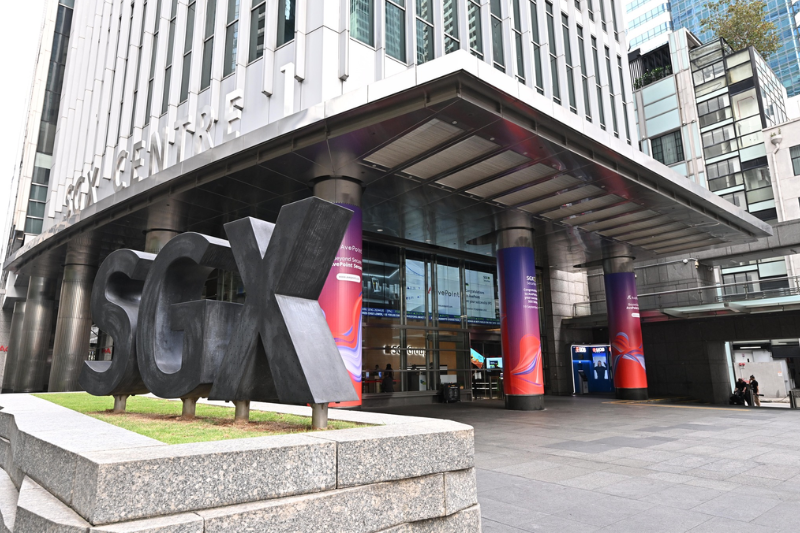
Singapore Exchange Limited (SGX: S68), or SGX — The Defensive Income Anchor
Since 2008, SGX has reduced its annual dividend only once – a reset following the extraordinary special dividends paid during the Great Financial Crisis.
Even then, the bourse operator has significantly increased total payouts across the full years ending 2007 and 2008 (FY2007 and FY2008), profiting from a one-off windfall caused by extreme market volatility.
The subsequent reduction in FY2009 reflected a move back to a sustainable ordinary dividend base rather than a decline in core performance.
The sole financial exchange of Singapore boasts an impressive dividend track record, having rewarded shareholders with a consistent annual dividend since its listing.
As a toll operator that collects fees from the trading of financial securities, SGX generates reliable profits and cash flows, rain or shine.
This effect is compounded during periods of increased volatility.
Reflecting its capital-light model, SGX’s annual cash flow from operations has trended upwards over the last decade, ranging between S$377.7 million and S$841.7 million in line with increased global derivatives trading.
Even during the pandemic, SGX posted positive cash generation.
The exchange’s defensive business model enables it to generate reliable annual dividends for shareholders.
Parkway Life REIT (SGX: C2PU), or PLife REIT — Strong Cash Flow Generator
Being the owner of healthcare assets like hospitals and nursing homes leased to professional operators, PLife REIT has demonstrated a reliable track record of growing its distribution income over the years.
As a REIT, PLife REIT is required to distribute at least 90% of its taxable income to unitholders annually to qualify for tax transparency treatment.
This factor has resulted in shareholders collecting a reliable, growing annual payout stretching back to 2007.
Remarkably, PLife REIT has achieved this with a low gearing ratio (33.4% as of 31 December 2025).
The key takeaway here is that companies that can grow their cash consistently, are better positioned to pay reliable dividends that are less likely to be reduced in times of stress.
Boustead Singapore Limited (SGX: F9D), or Boustead — Disciplined Capital Allocator
Boustead Singapore is a global infrastructure-related engineering and technology group with operations spanning 95 countries, offering services across energy engineering, real estate solutions, geospatial technology, and healthcare.
With a history stretching back to 1828, the company knows a thing or two about sustainable capital allocation.
While Boustead does not have a fixed dividend policy, management has disclosed several factors, including business environment, business conditions, and the financial position of the company, which guide its dividend payout.
This long-term thinking in managing its business has resulted in 21 consecutive years of annual dividends paid to shareholders.
Boustead also operates with minimal leverage, boasting a debt-to-equity ratio of merely 5.6%, as of 30 September 2025.
The company exemplifies the fact that sustainable dividends can be covered by disciplined capital allocation.
What These Companies Have in Common
Looking at these three companies, we can identify a couple of common characteristics.
These companies generate reliable income and cash flows.
Having strong financial positions, a long-term focus, and sustainable payout ratios also help ensure that dividends are less likely to be cut.
The main takeaway for investors is that dividend sustainability is based on strong business fundamentals.
Are Their Dividends Always Safe?
However, just because these companies have demonstrated consistency in the past does not mean the future will be the same.
One has to continuously monitor the fundamentals of these businesses. After all, it does not take much (think structural industry shifts) to cause a business’s downfall.
While history serves as a useful guide in picking companies that are less prone to reducing dividends, it is by no means a guarantee moving forward.
Get Smart: Consistency Is Power
Ultimately, dividend consistency matters much more than simply having a high yield figure.
Long-term wealth creation is built through the compounding of reliable dividends – a feat only possible when underpinned by robust business fundamentals.
For investors seeking durable passive income, prioritise businesses with proven, resilient cash flow generation over those offering high but hollow yields.
Some companies cut dividends in a downturn. These 5 didn’t.
Find out which Singapore blue chips have weathered past chaos…and why they could be your portfolio’s anchors in the next wave of downturn. Download the report free.
Follow us on Facebook, Instagram and Telegram for the latest investing news and analyses!
Disclosure: Wilson.H does not own shares in any of the companies mentioned.