A dividend increase is always a good thing, isn’t it?
And a dividend cut is always a bad thing right?
But is it really that straightforward?
Not necessarily.
Here’s why: Because when companies adjust their dividends, they’re not giving a simple “good news/bad news” message.
They’re making decisions based on their business outlook, balance sheet strength, and long-term plans.
And Singapore’s three banks are a perfect example.
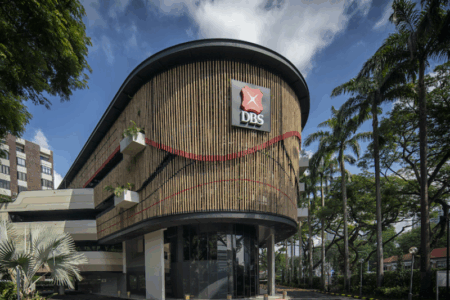
The trio of banks; DBS Group Holdings Ltd (SGX: D05), Oversea-Chinese Banking Corporation Ltd (SGX: O39), and United Overseas Bank Ltd (SGX: U11) just released their latest quarterly earnings and their dividend moves look very different.
Each one does make sense once you understand why they made it.
Looking Beyond the Dividend Headlines
DBS is raising dividends. OCBC just cut theirs by 6.8%. UOB is returning billions through special payouts.
Three banks.
Same environment.
Completely different moves.
It’s natural to look at these moves and wonder what they mean.
But they’re not signs of disagreement. Each bank is simply responding to the current environment based on its own strengths, business mix, and long-term priorities.
DBS is building on its diversified strengths.
Management is projecting an increase in quarterly dividends from S$0.60 to S$0.66, supported by strong fee income and continued momentum in wealth management.
On the other hand, OCBC is taking a disciplined approach.
Its interim dividend came in at S$0.41 (versus S$0.44 previously), while it maintained a 60% dividend payout ratio and continued its share buyback programme—steps that support long-term capital strength.
And finally, UOB is looking to balance shareholder returns with long-term resilience.
It is executing a multi-year S$3 billion capital return programme. The bank has announced special dividends alongside a sizable share buyback plan while strengthening its balance sheet through proactive provisioning.
Three different responses to the same conditions.
What Dividend Changes Really Mean
And that’s the key insight for dividend investors: A dividend change also tells us a whole lot about a company’s strategy.
A higher dividend doesn’t always mean stronger fundamentals.
A lower dividend doesn’t always signal trouble.
In the same way, a special dividend isn’t automatically a sign of strong performance. Sometimes it simply reflects a one-off event.
For example, like in the case of Singpost or Singapore Post Ltd (SGX: S08), when a company sells an asset and distributes the proceeds to shareholders.
That payout feels generous in the moment, but it doesn’t necessarily mean the underlying business has improved, or that higher dividends will continue.
Such cases also show us that context matters far more than the headline number.
Sometimes, it simply reflects what the company needs to prioritise at this point in the cycle.
In DBS’s case, stronger fee and wealth management income gives it room to raise its ordinary dividend.
For OCBC, keeping payouts slightly lower helps maintain capital flexibility while still supporting shareholders through buybacks.
And for UOB, returning capital over several years, while setting aside provisions early, is part of its plan to navigate the cycle with resilience.
Each bank is making decisions that they feel aligns best with its long-term goals.
Once you understand this, dividend changes become far less confusing.
Instead of reacting to the number alone, you begin to ask a better question:“What is the company trying to achieve?”
And that’s the question that leads to clearer thinking and better long-term decisions.
Get Smart: What the Dividend Is Really Telling You
Once you start viewing dividends this way, the picture becomes much clearer.
A dividend change is not a verdict on whether a company is “good” or “bad”.
It’s a reflection of what the business is optimising for right now. It could be anything from growth to flexibility, resilience, or even capital efficiency.
Different business priorities and goals lead to different decisions, even in the same environment.
So the next time a company raises, trims, or pays out a special dividend, take a moment to look beneath the headline.
Ask yourself what management is trying to achieve, what the balance sheet is signalling, and what the business is preparing for in the months ahead.
Because that’s how you move from reacting to understanding.
And once you understand what is going on beyond the headlines, that’s when you can move with confidence. No matter what the dividend number happens to be.
Many Singapore stocks fall behind inflation, which means your money quietly loses strength over time. Dividend stocks have a very different track record. Some continued delivering 6% to 13% every year across the toughest market conditions.
In this FREE report, discover 5 crisis-tested dividend stocks that kept rewarding investors while the market struggled. Download your dividend investing guide now.
Follow us on Facebook, Instagram and Telegram for the latest investing news and analyses!
Disclosure: Joanna Sng owns shares of DBS, OCBC and UOB.