Stocks that carry a high dividend yield are definitely attractive in the eyes of income investors, especially when inflation continues to be elevated.
A payout of above 5% allows investors to feel like a winner as it offers immediate and tangible cash flow.
The key thing is that an elevated yield will only help if these dividends are generated from businesses that can support this cash flow.
A weak business behind a generous distribution will only endanger investors, rather than help them.
Therefore, the goal for income investors is not to chase the highest yield, but rather, to identify yields backed by solid cash flow, stable assets, and consistent performance.
QAF Limited (SGX: Q01)
QAF Limited (QAF) is a leading food company with core businesses spanning bakeries, distribution, and warehousing.
The company’s operations and distribution network are spread across the Asia-Pacific, including Singapore, Malaysia, Indonesia and Australia.
In the first half of 2025 (1H2025), QAF’s revenue declined marginally by 1% from S$309.2 million a year earlier to S$306.1 million.
Meanwhile, profit after tax sank 66% year on year (YoY) to just S$4.2 million, on the back of rising operating costs such as lease expenses and impairment losses on certain property, plant and equipment in the Bakery segment.
At the same time, foreign exchange losses amounting to S$3.0 million also contributed to the drag in the bottom line as QAF holds a substantial amount of AUD-denominated cash and cash equivalents.
Despite the substantial drop in net profit, QAF’s management declared an interim dividend of S$0.01 per share for the period, unchanged from a year ago.
Based on QAF’s trailing 12-month dividend of S$0.05 per share and a share price of S$0.94 as of 13 January 2025, its dividend yield amounts to 5.3%.
QAF’s dividend can be supported by its balance sheet, which has S$162.4 million in net-cash, or S$0.28 per share, as of 30 June 2025.
The current economic environment, characterised by moderate economic growth and deepening geopolitical and trade risks, is expected to persist in the near future.
Management intends to continue mitigating margin pressures and seeking out growth for the company through product mix adjustments, new products, and improved operational efficiencies.
ComfortDelGro Corporation (SGX: C52)
ComfortDelGro is a leading transport operator that provides both public and private transportation services.
It has business operations across 13 countries, including Singapore, the United Kingdom, Australia, China, and more.
In its latest business update for 3Q2025, ComfortDelGro saw its revenue grow 12.9% YoY to S$1.3 billion.
Meanwhile, profit after tax and minority interests (PATMI) increased by 22.4% YoY to S$70.4 million, driven by its UK public transport business, the 2024 acquisition of Addison Lee, and gains from the sale of depots in Victoria, Australia.
On the balance sheet front, ComfortDelGro’s net debt position as of 30 September 2025 is S$695.6 million, up from S$218.2 million at the end of 2024.
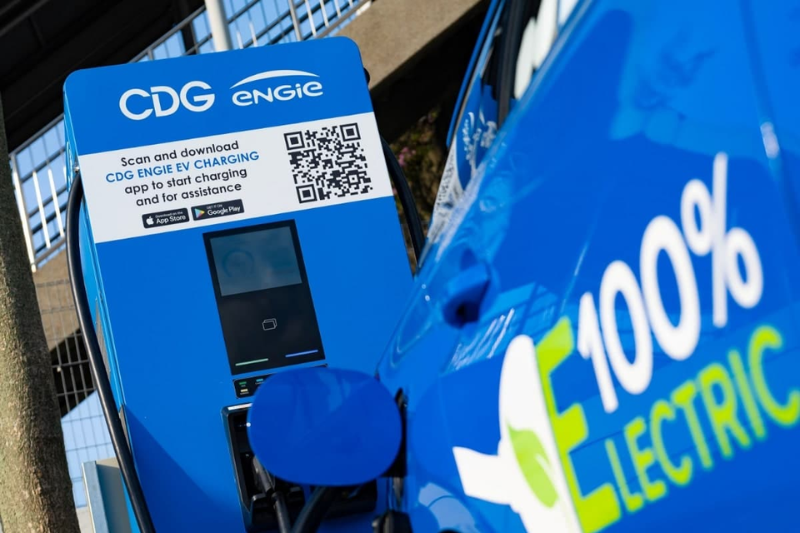
ComfortDelGro borrowed money to fund capital expenditures for its Metroline Manchester fleet and London EV buses, and the purchase of CityCab’s remaining shares.
The transport giant continues to hold a significant amount of cash and short-term deposits worth S$870.8 million as of 30 September 2025.
Based on ComfortDelGro’s trailing 12-month dividend of S$0.0816 and a share price of S$1.47, its dividend yield amounts to 5.6%.
The company’s dividend looks well-protected, given its trailing payout ratio of 76%.
Venture Corporation (SGX: V03)
Founded in 1989, Venture is a provider of technology services, products and solutions.
Headquartered in Singapore, Venture’s footprint spreads across over 30 countries.
Venture’s latest 3Q2025 results saw a 9% YoY drop in revenue to S$627.2 million and a 8% decline in net profit to S$55.6 million.
The company’s revenue in the quarter was also down 2.8% sequentially because of lower demand from the Lifestyle Consumer technology domain, and this led to a 3.0% dip in net profit to S$55.6 million.
As at 30 September 2025, Venture had a net cash position exceeding S$1 billion even after accounting for the payment of interim and special dividends, and share buybacks in the year.
At the same time, Venture continued to generate operating cash flow.
In 9M2025, Venture’s operating cash flow was S$189.6 million, but this was down 51% from a year ago.
Looking ahead, Venture intends to continue pursuing new business wins through its differentiated R&D, design and manufacturing capabilities.
The company hopes to achieve steady progress especially in the Semiconductor Related Equipment domain by strengthening partnership with its key customers.
Based on Venture’s trailing 12-month dividend of S$0.80 per share and a share price of S$15.88 (as of 13 January 2025), it offers a yield of 5.03%.
With a healthy net cash balance sheet and consistent cash flow generation from its operating activity, Venture’s dividend looks to be resilient and well supported in the long run.
It’s worth noting that Venture’s trailing operating cash flow of S$1.19 is higher than its trailing dividend of S$0.80 per share.
Get Smart: Quality dividend stocks are here for investors to pick up
The bottom line is that high dividend yield can help income investors to beat inflation but only when supported by real, recurring and stable cash flow.
A strong and sustainable payout usually comes from a stable, mature and strong business.
Yields that are the safest are usually not the highest ones, but rather the most sustainable.
Therefore, a reliable 5% dividend yield from a high-quality business beats a weak and fragile 8% dividend yield from an unstable and struggling one.
With sustainability comes stability, allowing investors to reliably compound their wealth year after year.
What if every stock trade in Singapore puts money in your pocket? One company earns whenever the market moves. Its free cash flow has grown close to 10% a year, and dividends are set to rise 40% over the next three years. Our free 2026 Dividend Playbook reveals this legal monopoly. Download it for free now.
Follow us on Facebook, Instagram and Telegram for the latest investing news and analyses!
Disclosure: Daniel L. does not own shares in any of the companies mentioned.