CapitaLand Integrated Commercial Trust (CICT) has long been a REIT prized for its stable payout, with a record stretching back to 2002.
Trading at a trailing distribution yield of 4.6%, CICT boasts a decent yield.
This distribution is particularly attractive in a world of macroeconomic uncertainty, marked by threats from tariffs, and inflation fears.
We are also in a rate-easing cycle where your fixed deposits just aren’t paying enough.
But, is this yield sustainable moving forward?
Let’s find out.
What Drives CICT’s Dividend: Key Fundamentals
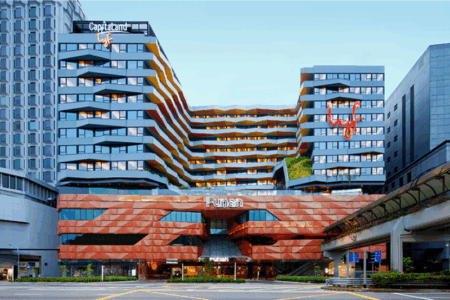
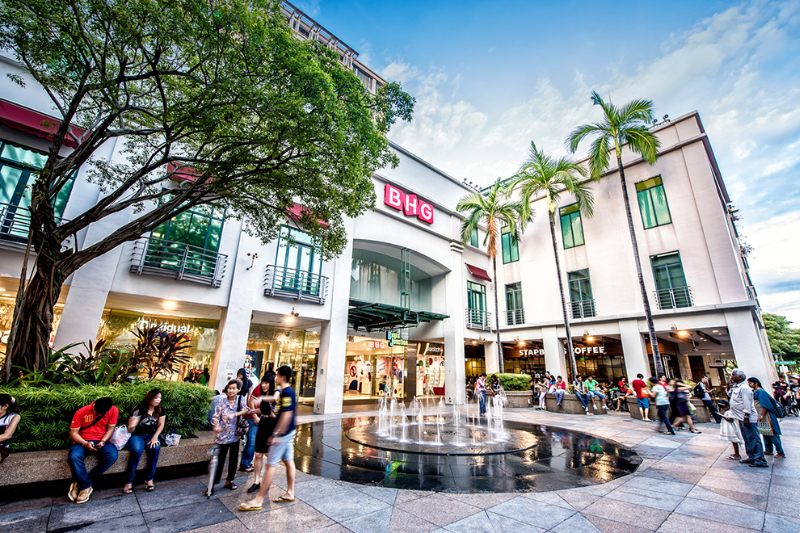
CICT (SGX: C38U) boasts a solid portfolio of prime office properties and popular shopping malls across Singapore.
The REIT’s current average portfolio occupancy rate is 97.2% as of 30 September 2025.
It has a wide diversification of blue-chip tenants, including Singapore’s Temasek Holdings, UNIQLO, and NTUC, making it unlikely for its tenants to miss rent payments.
Rental demand has been steady, with CICT already securing strong positive rental reversions, year-to-date (YTD) across both its retail and office assets.
CICT has a manageable lease renewal pipeline from 2026 to 2028; on average, about 14.9% of retail and 8.6% of its total rental income is up for renewal each year.
All of these factors add up to a steady flow of rental income, generating stable cash flows, allowing CICT to reward shareholders with a consistent yearly dividend.
CICT has a conservative capital profile with a current aggregate leverage ratio of 39.2%.
The REIT’s ability to service interest payments is decent, with an interest coverage ratio (ICR) of 3.5 times.
Debt maturity is well-spread out, with the majority of borrowings due between 2027 and 2030.
On this note, 2027 is the year to watch, with 20% of debt coming due that year (the highest amount due for a single year).
Recent Performance and Payout History
From 2020 to 2024, CICT’s distribution per unit (DPU) rose at a compound annual growth rate (CAGR) of 5.78% from S$0.0869 per share to S$0.1088, increasing every year.
This growth and stability of dividend payment is no mean feat, especially when you consider it includes the challenging periods of the COVID recession, and the high inflation years of 2022 and 2023.
Risks That Could Threaten Payout Sustainability in 2026
Keeping an eye on 2026, there are a couple of risks investors should be mindful of that could threaten CICT’s great dividend record.
Firstly, an economic slowdown will cause a decline in the number of people visiting and shopping at CICT’s retail malls.
Softer consumer spending will put pressure on CICT’s retail tenants, possibly pressuring rental renewals, or worse, resulting in missed rent payments.
Similarly, a weaker economy may lead to less demand for office space as companies try to cut costs; this decline in demand could, in turn, lower rental rates for CICT’s offices.
Second, higher interest rates will increase the financing costs for the mall operator, potentially leading to lower distributable income and DPU.
Third, as mentioned above, should CICT be unable to renew its expiring leases, the REIT could suffer from a decline in rental income.
It’s possible that CICT would need to sweeten the pot by increasing incentives to induce lease renewals, which could lower net property income.
Finally, CICT’s portfolio of properties is mainly concentrated in Singapore; any systemic event threatening Singapore’s real estate market could be disastrous for the REIT.
What to Watch in 2026 to Gauge Sustainability
As an investor, there are a couple of relevant metrics to monitor for a REIT.
The main metrics are occupancy and rental reversion that CICT discloses every quarter; having a high occupancy rate (90+%) and achieving positive rent reversions are what you would like to see as the combination of metrics means CICT’s properties are mostly filled, and it can grow its rental income.
Additionally, watch out for the office operator’s progress in securing new leases and the retention rate of its existing leases.
Any change in momentum, alongside a possible change in lease terms, could provide clues on the REIT’s future operating performance.
On the balance sheet front, investors should be mindful of its debt maturity schedule and its interest exposure.
In particular, do note its weighted cost of interest and the percentage of its borrowings that is hedged or denominated in fixed rates.
Finally, any changes in macroeconomic factors, such as consumer spending and office demand, could affect CICT’s business.
Get Smart: Smart Income Investing Means Monitoring, Not Assuming
Given CICT’s strong asset base, an impressive distribution history, and a moderate leverage ratio, the REIT appears well-placed to continue its steady distribution payout.
However, there’s no guarantee the current status will last throughout 2026.
The good news is that as long as CICT’s fundamentals, excluding general macroeconomic factors, hold up, you should do well over a long-term basis given its track record.
As always, you should diversify your portfolio and not just solely own CICT.
The world’s gotten unpredictable, but some Singapore companies have quietly kept thriving. You’ve probably seen them in your daily life. And yes, they’ve kept paying dividends through it all. Meet 5 resilient stocks built to navigate global storms. Get the free report here and see how they’ve done it.
Follow us on Facebook, Instagram and Telegram for the latest investing news and analyses!
Disclosure: Wilson.H does not own shares in any of the companies mentioned.