Here’s the uncomfortable truth about 2025: the year’s biggest wealth destroyer wasn’t tariffs, AI disruption, or interest rate uncertainty.
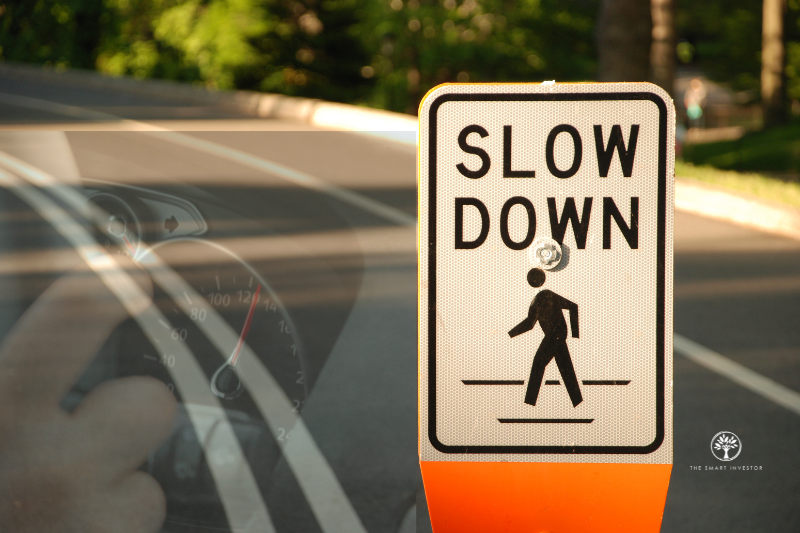
It was speed.
The numbers confirm what your gut already knew.
According to wealth manager Ben Carlson, the 2020s have already recorded 440 trading days with daily movements of 1 per cent or more.
A typical decade averages 507.
In other words, we’ve crammed nearly 10 years of volatility into less than five.
More specifically, it was the urge to react quickly to every piece of breaking news, an instinct that felt rational, but proved futile.
From the birth of the “TACO trade” (Trump Always Chickens Out) to the panic surrounding the sudden rise of China’s DeepSeek AI model, investors felt a constant pressure to act before the window closed.
This “fastest finger” mentality, where everyone tries to out-maneuver the other on every headline, is a recipe for exhaustion and sub-standard returns.
The fallacy lies in the belief that if you don’t act instantly, you’ve already lost.
The DeepSeek Trap
Let’s start with January 2025.
When China’s DeepSeek AI model burst onto the scene, AI-related stocks were hammered.
The narrative was instant and ominous: Nvidia’s dominance was over.
DeepSeek built a competitive AI model for under US$6 million and the era of US tech giants spending billions on Nvidia GPUs was over.
Nvidia (NASDAQ: NVDA) bore the brunt, suffering a 17 per cent fall in a single day.
Investors who prided themselves on “moving fast” dumped their positions.
Months later, this hasty assessment proved premature in more ways than one.
First, DeepSeek’s US$6 million figure didn’t include prior research costs — the actual expense was higher but unknown, effectively knocking out the main narrative.
Second, major tech companies continued pouring billions into data centres.
Much of that spending flowed directly to Nvidia, which reported revenue and profit gains of over 65 per cent and 57 per cent year-on-year over the past 12 months.
As of last Friday, Nvidia shares had risen by 60 per cent from their January low.
The investors who moved fast? They sold at the bottom and missed the recovery.
The investors who waited for clarity? They kept their shares and their gains.
Speed wasn’t the edge. It was a trap.
The TACO trade illusion
By mid-year, a new pattern had emerged. And Wall Street gave it a catchy name.
The TACO trade, or “Trump Always Chickens Out,” was born from observation: whenever US President Donald Trump announced aggressive tariffs, markets would tank.
Then, he would back down, and markets would surge.
The logic seemed bulletproof.
Buy the panic, wait for the rebound, pocket the gains.
Here’s the problem: if you noticed the pattern, so did everyone else.
Financial Times columnist Robert Armstrong coined the term, and it spread across trading desks like wildfire. Suddenly, this “edge” wasn’t an edge at all — it was a crowded trade where the fastest fingers won.
Here’s what the TACO traders missed: trying to time Trump’s reversals is no different from market timing.
And it has a brutal cost.
According to Hartford Funds, if you missed just the 10 best days in the stock market over the past 30 years, your returns would be less than half compared to staying fully invested.
That’s 10 days out of roughly 7,500 trading days.
Miss those, and you forfeit more than half your wealth.
The TACO traders thought speed kept them ahead of everyone else.
In reality, they were walking a tightrope where a single misstep could prove catastrophic.
The interest rate mirage
Even the professionals got burned by speed.
At the start of 2025, traders reacted swiftly to every hint about interest rate movements.
A strong jobs report? Sell immediately — fewer rate cuts ahead.
A weak inflation print? Buy before everyone else does.
This behaviour assumed that being first to interpret the data would translate into superior returns.
Let’s test that theory with 2024’s track record.
Goldman Sachs predicted five rate cuts. We got three.
Traders priced in a 73 per cent chance of a March 2025 cut.
The first cut came in September, six months later.
The market expected 1.5 percentage points of cuts. We got one.
In other words, the number of cuts was wrong, the timing was off, and the size of the cuts were lower than expected.
Yet despite these spectacular misses, the S&P 500 rose over 23 per cent in 2024.
The lesson?
You can be completely wrong about interest rates and still do well in the market — if you stay invested.
The investors who traded every data point, trying to front-run the US Federal Reserve, generated fees and anxiety.
The investors who ignored the noise generated returns.
And this isn’t just a US stock market phenomenon.
The same applies closer to home.
According to DBS Group‘s (SGX: D05) research, the Straits Times Index’s (SGX: ^STI) average total returns (including dividends) over a rolling 15-year period since 2000 have ranged between 6 per cent and 13.3 per cent.
All you needed to do was to slow down and wait.
Why speed feels right but isn’t
Why is it hard to avoid the allure of speed?
For starters, our brains are wired to react.
In his book Your Money and Your Brain, author Jason Zweig explains that our minds recognise patterns even when none exist.
But here’s the kicker: we can’t switch this mechanism off at will.
When Nvidia dropped 17 per cent, your brain screamed “danger” and demanded action.
When tariff headlines flashed, every instinct pushed you to do something.
But the “safety” of selling often creates more danger than it prevents.
Consider this: every major decline in 2025 was accompanied by an avalanche of negative headlines — detailed articles on what went wrong, podcasts dissecting the damage, and social media hot takes piling on.
Amid that onslaught, any good news was buried.
The investors who reacted to the noise sold at lows.
The investors who waited for the noise to clear bought those shares from them.
Speed didn’t protect portfolios. Patience did.
Get Smart: The case for deliberate slowness
If 2025 had a single lesson, it was this: the market rewarded patience and punished haste.
It didn’t matter whether the catalyst was tariffs, AI disruption, interest rates, or correction fears.
The pattern repeated. Panic sellers locked in losses. Patient holders captured the recovery.
Staying put sounds passive. In a year of extraordinary volatility, it felt almost negligent.
But the results speak for themselves.
The DeepSeek panic-sellers missed Nvidia’s 60 per cent rebound.
The TACO traders competed for scraps while long-term holders collected dividends.
The rate-prediction followers whipsawed in and out while the market climbed steadily higher.
Here’s what I’ve learned: in a world that’s moving faster, the edge isn’t moving faster too.
The edge is having the discipline to move slower than everyone else.
It’s not about ignoring information. It’s about refusing to let urgency override judgment.
As we head into 2026, the volatility won’t disappear.
If anything, the 2020s suggest we’re only halfway through this rollercoaster.
But the lesson of 2025 is clear: when everyone is racing to react, the patient investor wins by simply standing still.
Speed kills portfolios. Patience builds wealth.
Choose accordingly.
Big Tech is spending hundreds of billions on AI, and the ripple effects are just beginning. Our new investor guide shows how AI is changing the way companies generate revenue, structure their business models, and gain an edge. Even if you already know the major players, this report reveals something far MORE important: The why and how behind their moves, and what it means for your portfolio. Download your free report now.
Follow us on Facebook, Instagram and Telegram for the latest investing news and analyses!
Disclosure: Chin Hui Leong owns shares of DBS Group.