If the stock market is a country’s report card, Singapore is currently outperforming of the US today.
Last Friday, the NASDAQ Composite (^IXIC) closed 14.3% below its peak, putting the index in correction territory.
At the same time, Singapore’s Straits Times Index (SGX: ^STI) or STI broke past the 4,000 mark for the first time in its history.
That’s not all.
According to the Singapore Exchange (SGX: S68), the STI has delivered a total return of 40% over the past three years, representing a compounded annual growth rate of nearly 12%.
The contrast is stark — but what’s really moving the market?
For starters, the STI is home to 30 of the largest companies in the city-state.
So, it makes sense that everyone looks at the index to get a sense of how the local stock market is doing.
But here’s the thing: while all 30 companies are part of the index, they don’t all get an equal say.
Think of it like a class where the bigger kids tend to have a louder voice.
In the STI’s case, it’s all about size, specifically market capitalisation.
The bigger the company’s market value, the more weight it carries.
So, those absolute giants you’ll see at the top?
They’re the ones doing the heavy lifting and having the biggest influence on whether the local index goes up or down.
The finance world often calls them “blue chips”.
Think of these companies as the stalwarts of our local market.
They’re typically large, financially robust businesses that have been operating for a long time, building brands many of us recognise.
Because of their scale, they often lead the way in their respective industries.
Who are they?
We’re glad you asked.
| Company | Ticker Symbol | Industrial Classification Benchmark (ICB) Subsector | Index Weight |
| DBS Group Holdings | D05 | Financials | 25.0% |
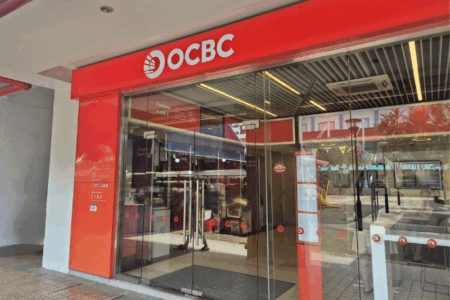
| Oversea-Chinese Banking Corporation | O39 | Financials | 16.3% |
| United Overseas Bank | U11 | Financials | 12.3% |
| Singapore Telecommunications | Z74 | Telecommunications | 6.9% |
| CapitaLand Integrated Commercial Trust | C31 | Real Estate | 3.0% |
| Jardine Matheson Holdings | J36 | Industrials | 3.0% |
| Singapore Exchange | S68 | Financials | 2.9% |
| Singapore Technologies Engineering | S63 | Industrials | 2.8% |
| Keppel | BN4 | Utilities | 2.6% |
| CapitaLand Ascendas REIT | A17U | Real Estate | 2.6% |
Source: SPDR Straits Times Index ETF, as of 28 March 2025
Not all blue chips are made the same
Here’s something you need to remember: size isn’t everything, and it’s certainly no lifetime guarantee of staying in the top league.
The business world is dynamic, after all.
Take CapitaLand (SGX: C31) and Wilmar International (SGX: F34), for instance.
Back in 2021, they were firmly planted within the Top 10 list of STI components.
Today? They have fallen down the pecking order.
It just goes to show that even established giants can see their positions change, reminding us why it’s crucial to look beyond just the label and understand the underlying businesses we might invest in.
The Big 10 blue chips
So, when we talk about the companies really steering the STI, who holds the reins?
Well, you simply can’t ignore the banks.
Leading the charge is Singapore’s heavyweight, DBS Group Holdings (SGX: D05).
Get this – this stock alone accounts for roughly a quarter of the entire index’s weight.
That’s significant influence right there.
But wait, there’s more.
Bring in its close cousins, Oversea-Chinese Banking Corp (SGX: O39) and United Overseas Bank (SGX: U11), and this banking trio commands a staggering 54% – yes, more than half – of the STI’s total clout.
It really drives home how crucial banking is, not just for investors but for Singapore’s economy as a whole.
Of course, the STI story isn’t solely written by banks.
Real estate makes its mark too, particularly through prominent players like the CapitaLand REIT pair of CapitaLand Integrated Commercial Trust (SGX: C38U) and CapitaLand Ascendas REIT (SGX: A17U).
When you add up all the property-related companies in the index, including the duo, the sector carves out a meaningful share, contributing nearly 15% overall (around 14.7% to be precise).
And let’s not forget the other key sectors rounding out the top influencers.
We have the industrials, represented by giants like Jardine Matheson Holdings (SGX: J36), and Singapore Technologies Engineering (SGX: S63).
Next, there’s telecommunications, where the familiar name Singapore Telecommunications or Singtel (SGX: Z74) flies the sole flag.
Understanding which sectors and companies have the biggest say helps us appreciate the forces shaping our local market’s performance.
Get Smart: How about a dividend for you too?
As of 28 March 2025, Singapore’s STI trades at a price-to-earnings ratio of around 13.3 times and a price-to-book ratio of a little over 1.3 times.
In terms of valuation, it’s not the most expensive index out there.
To sweeten the deal, the index offers a dividend yield of nearly 4.5% – a decent yield that is higher than what you can get from some bonds.
Simply put, patient investors have been rewarded with both capital gains and dividends.
As far as returns go, that’s a sweet combination.
Our FREE report, ‘7 Singapore Blue-Chip Stocks That Can Pay You for Life,’ reveals stable, dividend-paying stocks with a history of strong returns—even in uncertain markets. Get insights on Singapore’s most dependable blue-chips and see how they can offer you steady income. Download it today to start building your portfolio with confidence.
Follow us on Facebook and Telegram for the latest investing news and analyses!
Disclosure: Chin Hui Leong owns shares in CapitaLand Integrated Commercial Trust, CapitaLand Ascendas REIT, DBS Group, Singapore Exchange, OCBC and UOB.