Some stocks give investors a date to circle on the calendar, and for three Temasek-backed blue chips, that date falls in December 2026.
Temasek, a global investment company headquartered in Singapore, holds sizeable stakes in all three.
As at 31 March 2026, it held a 52% stake in Singapore Telecommunications Limited (SGX: Z74), or Singtel.
Its stake in Keppel Ltd (SGX: BN4) was 21% as at 31 March 2026, according to Temasek’s portfolio page.
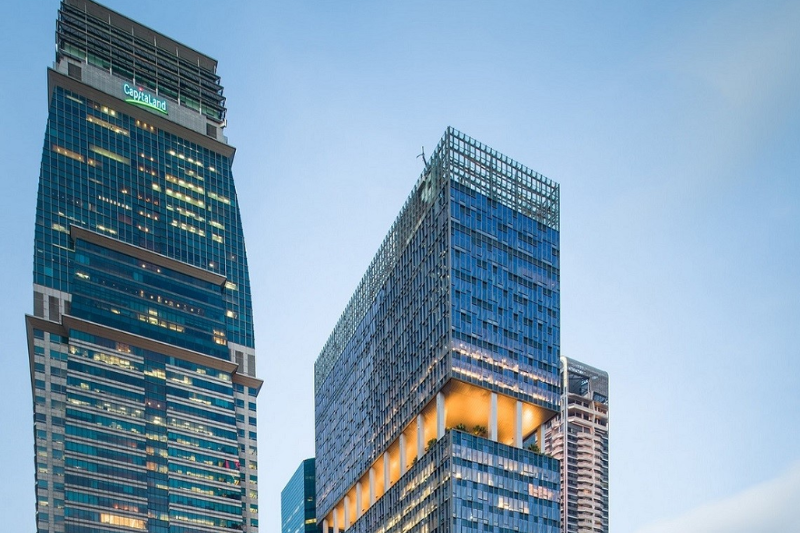
In CapitaLand Investment Limited (SGX: 9CI), or CLI, Temasek held a 54.2% deemed interest as at 13 March 2026.
Those stakes provide context, but they do not guarantee results.
What matters is whether each company delivers on its promises.
| Company | Temasek stake (as at) | Period | Key figure | December catalyst |
|---|---|---|---|---|
| Singtel | 52% (31 March 2026) |
1HFY2027 (half year to 30 September 2026) |
Underlying net profit +10.4% | S$0.09 interim dividend payable 11 December 2026 |
| Keppel | 21% (31 March 2026) |
9M2026 | New Keppel net profit up more than 20% | About S$600m of rig monetisation targeted by end-2026 |
| CapitaLand Investment | 54.2% deemed (13 March 2026) | 9M2026 | Fee-related revenue +15% | Second commercial C-REIT listing by end-2026 |
What will Singtel’s December payout tell you?
Singtel reported a stronger first half for the fiscal year ending 31 March 2027 (1HFY2027).
Underlying net profit increased 10.4% year on year (YoY) to S$1.5 billion, and would have risen 15.9% in constant currency terms.
NCS, its technology services arm, grew earnings before interest and tax (EBIT) by 15.5%, while Digital InfraCo, its digital infrastructure unit, grew EBIT by 25.3%.
Singtel Singapore went the other way, with EBIT falling 4.5%.
Management was confident enough to raise its full-year guidance.
It now expects OpCo EBIT, its measure of operating profit, to grow by the mid to high-single digits, up from the low to mid-single digits previously expected.
Shareholders will receive a payout in December.
Singtel approved an interim dividend of S$0.09 per share, up 9.8% YoY and payable on 11 December 2026.
This comprises a core dividend of S$0.071, or 78% of underlying net profit, and a value realisation dividend of S$0.019.
Where does the extra slice come from?
It comes from asset sales.
Capital recycling under its Singtel28 plan has unlocked S$6.8 billion since 2024, or 75% of its S$9 billion mid-term target.
Singtel has also bought back and cancelled 216 million shares for S$974 million under its S$2 billion programme.
Will Keppel hit its year-end monetisation goal?
Keppel is reshaping itself as an asset manager, and its results reflect the distinction between its new and legacy businesses.
For the first nine months of 2026 (9M2026), net profit at “the New Keppel”, which excludes its non-core portfolio and discontinued operations, rose more than 20% YoY.
Keppel’s funds under management passed its end-2026 target of S$100 billion by July 2026.
Including non-core assets, however, nine-month net profit fell 40% YoY, mainly due to impairments and holding costs on assets awaiting sale.
That is why asset sales matter.
Keppel has announced S$3.7 billion in asset monetisation year to date, exceeding its full-year target of S$2 billion to S$3 billion.
About S$940 million has been completed and realised.
December is the deadline for the next part of the plan.
Keppel is targeting completion of about S$600 million in further monetisation by the end of 2026, from its first six legacy rigs.
There is a potential reward for shareholders, too.
Keppel aims to pay out 10% to 15% of the realised proceeds from its non-core asset sales as special dividends.
Treat this as an aim, not a declared dividend, as the final amount will depend on how much cash is actually received.
Can CapitaLand Investment list its next China REIT on time?
CLI is generating an increasing share of its income from fees.
For 9M2026, fee-related revenue rose 15% YoY to S$1.0 billion, with listed funds fee revenue up 30% to S$336 million.
Total revenue, however, dipped 3% YoY to S$1.5 billion.
Revenue from its real estate investment business fell 23% to S$580 million following the divestment and deconsolidation of Synergy and Dalian IT Park.
CLI has continued to recycle its capital.
From 1 January to 3 November 2026, it raised around S$4.3 billion in equity and deployed about S$9.6 billion, while divesting about S$5.7 billion.
The key December event is a planned new listing.
CLI aims to list a second commercial C-REIT, a real estate investment trust (REIT) listed in China, by the end of 2026, subject to market conditions.
Another listed fund would add to the fee base that is already driving growth.
The main risk is timing, as market conditions could push the listing into 2027.
Get Smart: Check the promise against the delivery
Temasek’s backing tells you who the long-term shareholder is, but it does not tell you whether a company will meet its targets.
That is something investors need to check for themselves.
For Singtel, compare full-year operating profit growth with the mid to high-single-digit range it has just set.
For Keppel, track how much of the announced S$3.7 billion turns into realised cash, since its special dividend remains an aim rather than a commitment.
If CLI’s listing slips into 2027, ask yourself a simple question: does your reason for owning the stock still hold?
This new 10-minute read could change how you invest this year. Inside:
5 SG dividend-paying blue chips that have quietly powered through past downturns, and could reward you handsomely in the next.
Grab the free report now. It might be the most profitable thing you read today.
Follow us on Facebook, Instagram, Telegram and YouTube for the latest investing news and analyses!
Disclosure: The Smart Investor does not own shares in any of the companies mentioned.