A rising dividend is pleasant, but one that can rise again is even more useful.
This week, three stocks with Temasek, a global investment company headquartered in Singapore, among their shareholders will make payouts.
All three have raised their payouts over the past year, but the key question is what funded each increase and whether it can happen again.
As at 11 March 2026, Temasek held a 21.2% deemed interest in Keppel DC REIT (SGX: AJBU) through Keppel Ltd and related companies.
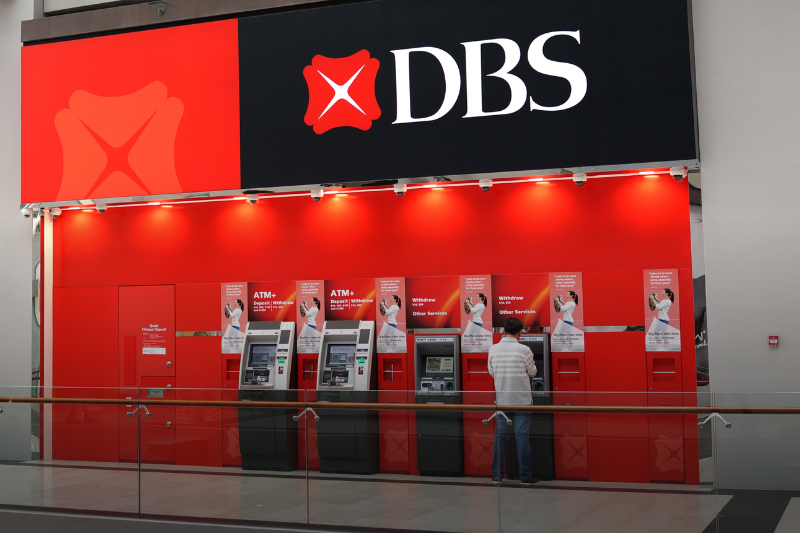
DBS Group Holdings Ltd (SGX: D05), or DBS, counted Temasek as a 28.3% shareholder as at 10 February 2026, held directly and through Maju Holdings.
Singapore Exchange Limited (SGX: S68), or SGX, has a different ownership arrangement, with SEL Holdings holding 23.35% of SGX as at 1 September 2026.
Temasek has described SEL as a special purpose entity that it owns, holding the shares for the Financial Sector Development Fund without voting rights.
| Company | Temasek stake (as at) | Payout | Period | Change | Payment date |
|---|---|---|---|---|---|
| Keppel DC REIT (SGX: AJBU) | 21.2% (11 Mar 2026) | S$0.02261 (advanced distribution) | 1 July 2026 to 9 September 2026 (part period) | No like-for-like figure; 1H2026 DPU +11.3% | 23 Nov 2026 |
| Singapore Exchange Limited (SGX: S68) | 23.35% held by SEL Holdings (1 Sep 2026) | S$0.1175 | 1QFY2027 (single quarter) | +9.3% | 23 Nov 2026 |
| DBS Group Holdings Ltd (SGX: D05) | 28.3% (10 Feb 2026) | S$0.66 ordinary + S$0.15 capital return | 3Q2026 (single quarter) | Ordinary +10.0%; total +8.0% | 24 Nov 2026 |
All three have already passed their record dates, so buying their shares or units now will not qualify you for this week’s payouts.
Can Keppel DC REIT keep growing its DPU?
As at 30 September 2026, Keppel DC REIT owned 27 data centres across 10 countries, including Tokyo Data Centre 4 and 5.
On 23 November 2026, it will pay an advanced distribution of S$0.02261 per unit for the period from 1 July to 9 September 2026.
The REIT made this payment to ensure that income earned before its private placement went only to existing unitholders.
As the distribution covers just 71 days, there is no like-for-like comparison.
The full-period figures tell you more, with distribution per unit (DPU) for the first half of 2026 (1H2026) rising 11.3% year on year (YoY) to S$0.05714.
For the first nine months of 2026 (9M2026), DPU climbed 11.7% to S$0.08571.
Most of that growth was earned, with rental reversions coming in at around 14% for 9M2026 and the acquisition of Tokyo Data Centre 3 adding income.
For 9M2026, net property income (NPI) rose 13.1% YoY to S$316.8 million, ahead of DPU growth.
So where did the gap go?
Distributable income rose 16.7%, but DPU grew a slower 11.7%.
This is because the S$625 million placement enlarged the unit base before Tokyo Data Centre 4 and 5 began contributing on 1 October 2026.
Management expects the acquisition to lift DPU by 2.0% on a pro forma basis.
Aggregate leverage would be 38.8% on a pro forma basis, including loans drawn on 1 October 2026, up from 36.2% as at 30 September 2026.
Is SGX’s dividend increase locked in?
SGX earns fees from listing, trading, clearing and settling shares in Singapore, as well as from derivatives and fixed income, currencies and commodities (FICC).
On 23 November 2026, it will pay S$0.1175 per share for the first quarter of its financial year ending 30 June 2027 (1QFY2027).
That is 9.3% more than the S$0.1075 paid for the same quarter a year earlier.
The increase was planned, as SGX has guided for a S$0.0025 rise in its dividend each quarter through FY2028.
On that schedule, its FY2027 dividend would add up to S$0.485.
That makes SGX’s increase the most predictable of the three, but it is still a plan rather than a guarantee, although SGX has said it is confident of delivering the increases through FY2028.
Keep FY2026’s one-off dividend of S$0.125 separate, as it came from capital recycling gains and lifted the full-year payout to S$0.57.
Investors should not budget for that extra payment to recur.
Falling interest rates are another risk, as SGX earns treasury income on collateral balances, which rose S$4.5 million in FY2026.
Can DBS keep lifting its ordinary dividend?
DBS serves retail, wealth and corporate customers across Asia.
On 24 November 2026, DBS will pay an ordinary dividend of S$0.66 per share for the third quarter of 2026 (3Q2026), up 10.0% from S$0.60 a year earlier.
It will also pay an unchanged capital return dividend of S$0.15, bringing the total to S$0.81, which is 8.0% higher than the S$0.75 paid a year earlier.
Here’s the thing: the payout rose even as quarterly profit fell.
Total income slipped 1.5% YoY to S$5,845 million, while net profit fell 4.8% to S$2,813 million.
Trading was responsible for most of the decline, with markets trading non-interest income dropping to S$17 million from S$419 million.
The core business continued to grow, with customer loans rising 9.5% to S$478.6 billion and net fee and commission income increasing 6% to S$1.43 billion.
For 9M2026, net profit rose 2% to a record S$8.82 billion.
For 2027, CFO Chng Sok Hui expects net interest income growth close to the mid-single digits, although DBS CEO Tan Su Shan cautioned that the outlook has become more uncertain.
With the capital return dividend unchanged, growth in the ordinary dividend is the figure to watch, as it will show whether profit is keeping pace.
Get Smart: Check what paid for the raise
A bigger payout is worth celebrating only once you know what funded it.
For a REIT, compare DPU growth with changes in the unit count, because a placement spreads income across more units.
For a bank, compare ordinary dividend growth with profit growth.
For SGX, remember that a pre-announced increase is still a plan, not a guarantee.
If rental reversions slow or trading volumes fade next year, which of these payouts would you still expect to rise?
The world’s gotten unpredictable, but some Singapore companies have quietly kept thriving. You’ve probably seen them in your daily life. And yes, they’ve kept paying dividends through it all. Meet 5 resilient stocks built to navigate global storms. Get the free report here and see how they’ve done it.
Follow us on Facebook, Instagram, Telegram and YouTube for the latest investing news and analyses!
Disclosure: The Smart Investor owns shares or units in DBS, SGX and Keppel DC REIT.