

Four Singapore real estate investment trusts (S-REITs) connected to Temasek Holdings are distributing income to unitholders this week.
Temasek, a global investment company headquartered in Singapore, holds 100% of Mapletree Investments and 21% of Keppel Corporation (SGX: BN4) as of 31 March 2026.
Keppel REIT (SGX: K71U) pays out on 15 September.
Mapletree Pan Asia Commercial Trust (SGX: N2IU), or MPACT, and Mapletree Logistics Trust (SGX: M44U), or MLT, follow on 16 September.
Keppel DC REIT (SGX: AJBU) closes out the week on 18 September.
Behind these payouts, investors face a broader question: can these distributions last?
Can Keppel DC REIT sustain double-digit DPU growth?
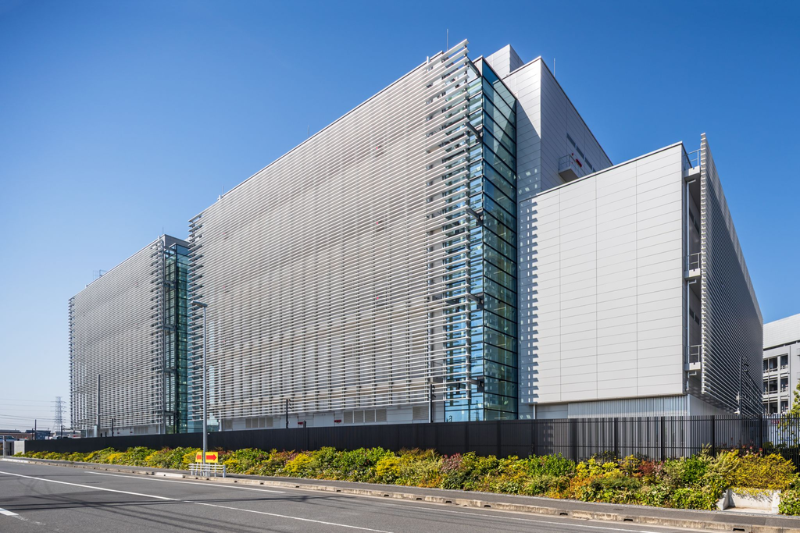
Keppel DC REIT owns 25 data centres across 10 countries, with total assets under management (AUM) standing at approximately S$6.3 billion.
For 1H2026, gross revenue rose 14.5% year on year (YoY) to S$242 million, while net property income (NPI) climbed 15.1% to S$210.4 million.
Distributable income advanced 18.5% YoY to S$150.7 million, pushing distribution per unit (DPU) up 11.3% to S$0.05714.
Positive rental reversions of 10%, alongside contributions from the Tokyo Data Centre 3 acquisition, fuelled this growth.
The REIT also raised its effective interest in Keppel DC Singapore 3 and 4 to 100% in February 2026.
The Kelsterbach Data Centre divestment and higher finance costs partly offset these operational gains.
Portfolio occupancy dipped slightly to 92.5% as of 30 June 2026 from 95.6% a quarter earlier, as the Cardiff Data Centre contract expired during the period.
Excluding Cardiff, occupancy would have remained steady at 95.3%.
Aggregate leverage came in at a comfortable 34.0%, supported by a low cost of debt of 2.6%.
Why did Keppel REIT’s DPU fall despite a 22.8% income increase?
Keppel REIT owns 14 prime commercial assets across Singapore, Australia, South Korea, and Japan, with AUM totalling S$11.8 billion.
For 1H2026, property income increased 16.7% YoY to S$159.3 million, and NPI rose 13.1% to S$122.5 million.
Distributable income grew strongly, up 22.8% to S$129.6 million.
Despite that growth, DPU slipped 4.0% to S$0.0261.
An enlarged unit base resulting from recent acquisitions diluted the per-unit distribution.
Operationally, a 75% interest in Top Ryde City Shopping Centre and an additional one-third stake in Marina Bay Financial Centre Tower 3 powered the income gains, with lower borrowing costs also contributing.
Portfolio committed occupancy stood at 96% with positive rental reversion running at 12.8%.
Capital recycling remains active, as the REIT is divesting KR Ginza II in Tokyo at a 28.4% premium to its 2022 purchase price.
Aggregate leverage ended at 40.0% with a cost of debt of 3.27%.
Is MLT’s slim DPU gain a cause for concern?
MLT holds 175 logistics properties across nine Asia-Pacific markets, representing AUM of S$13.1 billion.
For 1QFY2027, gross revenue rose 0.8% YoY to S$178.9 million, while NPI grew 2.0% to S$156.4 million.
DPU edged up 0.2% YoY to S$0.01816.
Foreign exchange headwinds from a weaker Japanese yen, Korean won, and Hong Kong dollar weighed on the headline figures.
Excluding currency effects, gross revenue and NPI would have risen 2.0% and 3.1% respectively.
A newly acquired Grade A warehouse in Mumbai and a first full quarter of contribution from Mapletree Joo Koon Logistics Hub supported the top line.
Borrowing costs also provided relief, falling 2.7% YoY to S$38.3 million.
Portfolio occupancy stood at 96.4% with positive rental reversion at 0.9%, or 2.3% when excluding China.
Post-quarter, MLT announced approximately S$155 million in divestments, including a Singapore property sold at a 20.3% premium to valuation.
Aggregate leverage sat at 40.5% with an average borrowing cost of 2.6%.
What’s behind MPACT’s DPU decline?
MPACT owns 15 commercial properties across Singapore, Hong Kong, China, Japan, and South Korea, with AUM of S$15.2 billion.
For 1QFY2027, gross revenue fell 5.6% YoY to S$206.5 million, while NPI declined 6.8% to S$154.8 million.
DPU dipped 2.5% YoY to S$0.0196, though an 18.4% drop in finance expenses helped cushion the impact.
VivoCity remained the key anchor for the portfolio, delivering an 8.9% YoY increase in NPI following the completion of its Basement 2 asset enhancement.
Tenant sales at the mall also climbed 4.9% to S$266.8 million.
However, prior-year divestments removed baseline income, while a stronger Singapore dollar and transitional vacancies at Mapletree Business City added to top-line drag.
Portfolio occupancy fell to 84.4% from 89.3% a year ago, dragged lower by weakness in Japan (56.0%) and China (82.4%).
Rental reversion stayed positive overall at 4.3%, even as Festival Walk and China assets recorded negative reversions.
Management used divestment proceeds to pay down debt, bringing aggregate leverage to 37.7% with a cost of debt of 2.94%.
Get Smart: Look beyond the DPU headline
While DPU is the exact figure that lands in a unitholder’s account, distributable income provides the clearest signal of where that payout is headed.
Keppel REIT’s distributable income grew 22.8% YoY even as its DPU fell 4.0%, demonstrating how unit dilution from acquisitions can temporarily mask operational momentum.
By contrast, Keppel DC REIT’s 18.5% distributable income growth translated directly into an 11.3% DPU increase.
Ultimately, a single distribution period offers only a snapshot rather than a final verdict.
Looking at broader underlying metrics – occupancy trends, rental reversions, total distributable income growth, and overall debt costs – reveals far more about whether a REIT’s payouts can remain sustainable over the long haul.
Imagine receiving steady rent increases for more than two decades. It sounds unusual, but one healthcare REIT already has rental escalations locked in until around 2042. Income visibility like this is hard to find today. We break down how this REIT built such dependable cash flow in our FREE dividend report and how it could strengthen a retirement portfolio. Get the free report here.
Follow us on Facebook, Instagram, Telegram and YouTube for the latest investing news and analyses!
Disclosure: The Smart Investor owns units of Keppel DC REIT, MLT and MPACT.


