Can you imagine retiring to an income stream that keeps coming into your account with no need to clock in at work?
This could be a dream come true for investors in Singapore, with the numerous dividend-paying companies on the local stock market.
What you need is a clear investment strategy and time to let compounding work.
Clueless on how to start?
Follow as we break down the four practical steps you can take to transform dividend investing into a reliable stream of retirement income.
Step 1: Build a Portfolio of Reliable Dividend Payers
Your first step to a reliable stream of retirement income will be to build a portfolio of reliable dividend payers.
Look beyond companies’ dividend yields and into their ’ balance sheets, free cash flows, and growth indicators.
A payout ratio of between 40%-70% indicates that a company is paying a reasonable proportion of its earnings as a dividend while retaining sufficient capital to reinvest and maintain financial soundness.
A good indicator of a potential winner is one that has a sound balance sheet, characterised by reasonable debt, positive cash flows, and cash-generating assets.
Look for companies that have a history not only of paying dividends, but also of paying increasing dividends over the years.
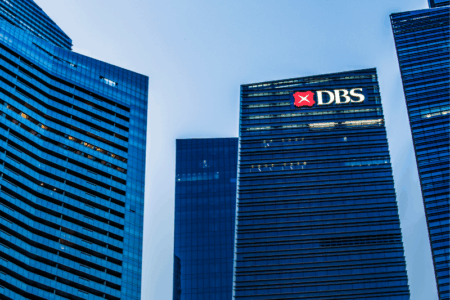
Quality holdings such as Parkway Life REIT (SGX: C2PU), CapitaLand Integrated Commercial Trust (CICT) (SGX: C38U), and DBS Group Holdings (SGX: D05) can form the bedrock of your dividend-focused portfolio.
Parkway Life’s distribution per unit (DPU) has grown steadily from an initial S$0.0632 in 2007 to S$0.1492 in 2024.
Likewise, DBS Group had a dividend of S$2.22 per share for 2024, around four times higher than its dividend of S$0.52 per share for 2014. The bank’s payout for just the first nine months of 2025 of S$2.25 per share is already S$0.03 more than 2024’s dividend for the whole year.
The core of consistent income, even in market downturns, is the reliable dividend payers with strong financials.
Step 2: Reinvest Dividends to Accelerate Compounding
With a well-diversified portfolio of dependable dividend-paying stocks, you can now expect a steady stream of income regularly.
Reinvest the dividends rather than spending them as cash.
When dividends are reinvested, future dividends are produced by the newly bought shares, without further outlay from you.
With time, this mechanism starts snowballing: the more shares you hold, the more dividends you get, and the bigger your portfolio becomes.
Compounding means that modest yearly returns become enormous wealth over decades.
Consider setting up automatic reinvestment plans or dividend accumulation to reinvest for more using the Dollar-Cost Averaging (DCA) strategy.
Step 3: Diversify Your Dividend Streams
We all know we shouldn’t put all our eggs in one basket.
Diversifying your income streams across sectors lessens reliance on any one industry or company, thus helping smooth out the ups and downs of economic cycles.
Have a healthy mix of banks and financials like DBS and Oversea-Chinese Banking Corporation Limited (SGX: O39), along with REITs such as Parkway Life REIT and CapitaLand Commercial Trust in your portfolio.
Add to that defensive consumer names such as Sheng Siong Group Ltd (SGX: OV8), and essential transport service providers such as SBS Transit (SGX: S61) to further diversify your holdings.
Diversify your portfolio so that you will not be in a vulnerable position when certain sectors or countries suffer from economic downturns.
Diversification makes your dividend streams stay stable even when the market shifts.
Step 4: Transition From Growth to Income Mode
Assuming that you have been religiously following steps one to three, you should be sitting on top of a sound investment portfolio full of high-quality holdings that generate a diverse stream of income.
As retirement approaches, instead of reinvestment, you can withdraw your dividends as income for your golden years.
Allocate at least 12 to 24 months’ worth of living expenses in an emergency fund in cash and/or liquid short-term investments.
This prevents you from liquidating quality stocks prematurely for short-term needs.
Maintain your core dividend portfolio for stability and long-term income.
Establish a systematic withdrawal plan that will continue to let your money compound and provide you with an ongoing income stream throughout your retirement.
Get Smart: Building Independence with Dividends
Dividend investing is about building financial independence one step at a time, using payouts to fund your future investments and creating a resilient portfolio.
You are creating for yourself a portfolio that can last a lifetime by selecting dependable dividend payers, reinvesting regularly, diversifying with research, and withdrawing with a plan.
Stay early, stay invested, and let dividends work towards the retirement that you deserve.
Imagine a life where steady income flows, no matter the market. Our new free report, “Retire Early with Dividends,” reveals how. We’ve pinpointed 5 dependable Singapore dividend stocks that offer a proven, stress-free path to financial freedom. Stop just dreaming and start building your early retirement plan today. Your free guide awaits here.
Follow us on Facebook, Instagram and Telegram for the latest investing news and analyses!
Disclosure: Wenting does not own shares in any of the companies mentioned.