2025 was a year of restraint.
High borrowing costs torpedoed distributions, chilling investor sentiment, leaving REIT valuations flat.
Everything changed as the year closed.
Rate cuts weren’t just chatter anymore, they started to feel real.
Inflation softened, and the key sectors – retail, industrial, and commercial – finally found their footing in both rents and occupancy.
Now, 2026 is poised for a turnaround.
This recovery probably may not roar back like past cycles, but it promises to be steadier, more disciplined, and built on real operating improvement.
For the long-term income investors, this is the moment to spot the first genuine signs of distribution growth.
These four REITs possess the balance sheet strength and focused portfolio to lead this inevitable rebound.
Ascendas REIT (CLAR, SGX: A17U)
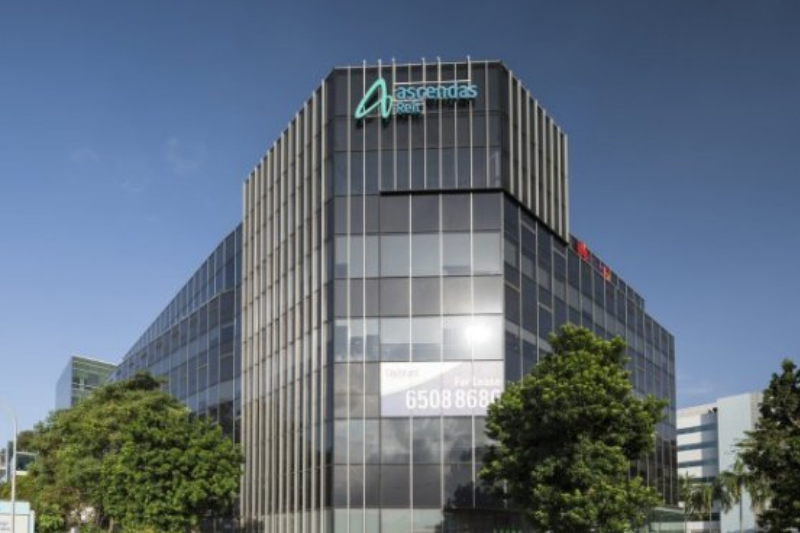
Ascendas REIT heads into the new year as a standout player in the industrial sector.
By the end of September 2025, the trust had portfolio occupancy at 91.3%, as per its 3Q2025 business updates.
Demand for logistics and business park properties held steady, with its Weighted Average Lease Expiry (WALE) remaining stable at 3.6 years.
Rental reversions jumped 7.6%, showing proof that tenants still pay up for quality space in Singapore and Australia.
At a share price of S$2.78 as at 1 December 2025, the units give the trust a market cap of about S$12.95 billion.
Based on this, the annualised yield works out to about 5.1%.
Financial strength sets Ascendas REIT apart – its aggregate leverage sat at 39.8% as of September, with an interest coverage ratio of 3.6 times.
Earlier results for the first half of FY2025 (1HFY2025) reported a distribution per unit (DPU), of S$0.07477, easing 0.6% from the year before.
If financing costs fall, Ascendas is well-poised to pursue new acquisitions to lift returns.
Their real strength comes from a diverse tenant base, with many of the REIT’s tenants rooted in critical sectors.
CapitaLand Integrated Commercial Trust (CICT, SGX: C38U)
CapitaLand Integrated Commercial Trust still leads the pack for retail and office REITs in Singapore.
With a strong portfolio of prime properties and a dependable group of tenants, CICT reported S$403.9 million in gross revenue for 3Q2025, up 1.5% from last year.
Net property income (NPI) increased over the same period by 1.6% to S$294.4 million.
Based on the annualised 1H2025 DPU and the S$2.33 unit price as at 1 December 2025, which works out to an implied yield of about 4.7%.
The trust carried a market cap of about S$17.559 billion based on intraday figures of 1 December 2025.
Operationally, its 3Q held steady – retail properties were 98.7% occupied by the end of September.
Integrated developments came in at 97.3%, and office assets weren’t far behind at 96.2%.
Overall occupancy settled at 97.2%, and WALE was 3.2 years.
CICT’s capital management remains on solid ground.
As of September 2025, aggregate leverage stood at 39.2%, interest coverage ratio was 3.5 times, and average debt cost sat at 3.3%.
Earlier, in its 1H2025 results, CICT’s distributable income jumped 12.4% to S$411.9 million.
That strong result comes from ION Orchard’s contribution and better performance across existing properties.
DPU climbed 3.5%, hitting S$0.0562.
Rental reversions turned positive in 1H2025: retail leases saw a boost of 7.7%, while offices rose by 4.8%.
With asset enhancement projects moving ahead at Lot One and Tampines Mall, and the business climate on the mend, CICT looks set for more stable distribution growth in 2026.
AIMS APAC REIT (SGX: O5RU)
AIMS APAC REIT catches the eye if you want solid yields without straying into risky waters.
In 1HFY2026, gross revenue edged up slightly, just 0.2% YoY to S$93.7 million.
NPI did a little better, climbing 1.1% to S$68.4 million.
Distributions to unitholders hit S$38.6 million, up 1.6%, which nudged its DPU up 1.1% to S$0.04720.
At S$1.44 per unit as of 1 December 2025, the REIT’s market cap is about S$1.177 billion based on latest intraday figures.
Annualised and calculated off its latest share price, that’s a yield of roughly 6.6%.
Breaking down the payouts, 1Q DPU crept up to S$0.0228, and 2Q DPU moved to S$0.0244.
By 30 September 2025, the portfolio’s occupancy stood at 93.3% – on a committed basis, it looks even better at 95.1%.
The REIT’s WALE stretched to 4.2 years, supported by a base of 188 tenants, with a large 82.5% of gross rental income coming from essential or defensive sectors.
Leasing activity looked solid in 1HFY2026, with 11 signed new leases and 36 more renewed, together covering 12.6% of net lettable area.
Rents moved up too, with a positive reversion of 7.7%.
The balance sheet feels conservative but flexible – aggregate leverage was 35.0% at the end of September, and there’s no need to refinance until FY2027.
AIMS APAC REIT has approximately S$169.7 million in available cash and undrawn credit, plus a 2.5-year average debt maturity and an interest coverage ratio of 2.5 times.
That’s a solid buffer against rising rates, and gives them room to move if market conditions turn in their favor.
All considered, this REIT lands squarely in the mid-sized industrial and logistics space.
It delivers a dependable yield, carefully manages its capital, and keeps income flowing.
If funding costs fall in 2026 and demand in its main markets holds up, the portfolio is expected to get re-rated, and its DPU should grow.
Frasers Centrepoint Trust (FCT, SGX: J69U)
FCT continues to set the standard for Singapore’s suburban retail scene.
In FY2025, the trust turned in strong numbers, riding on the Northpoint City South Wing acquisition and steady operations.
Gross revenue shot up 10.8% to S$389.6 million, and NPI followed, rising 9.7% to S$278.0 million.
For the year, DPU edged up 0.6%, landing at S$0.12113.
Its share price sits at S$2.28 as of 1 December 2025, giving FCT a market cap of about S$4.64 billion.
The business kept its momentum all year.
By 30 September 2025, retail committed occupancy stood at a strong 98.1%, and rental reversion for FY2025 was higher by 7.8% compared to last year.
Shopper traffic edged up 1.6% YoY, and tenants’ sales rose 3.7%.
Aggregate leverage dropped to 39.6% as of 30 September 2025, with the interest coverage ratio improving to 3.46 times.
Borrowing costs dipped to 3.5% in 4Q, which took some strain off distributions.
Ongoing asset enhancements at Hougang Mall and steady leasing activity across the portfolio set FCT up well for 2026.
For FCT, its foundation feels solid, and income remains on the rise.
Why 2026 Could Mark a Turning Point
With interest rates expected to continue falling, refinancing costs should ease across the sector.
Stabilising capitalisation rates will reduce valuation pressure, and demand across retail, industrial, and commercial assets appears firm.
As yield spreads widen, investors who stepped back in 2024 and 2025 may begin returning to income producing assets.
Recoveries often begin quietly, unfolding in improving rental reversions, firmer occupancy, and the early rise of distributable income.
Get Smart: Position Early for the Next Upcycle
The REITs set to do well in the next phase of the cycle all have a few things in common: strong balance sheets, reliable tenants, and a foothold in sectors where demand doesn’t just vanish overnight.
Consider Ascendas REIT, CICT, AIMS APAC REIT, and FCT – these names tick every box.
Even during the toughest part of the rate cycle, their fundamentals didn’t crack.
And now, signs of recovery are underway.
If you’re thinking long term, this is the right moment to act.
The next upcycle won’t burst onto the scene all at once; it’ll build slowly, the way a tide creeps back in.
The investors who get in early are the ones who end up ahead.
The world’s gotten unpredictable, but some Singapore companies have quietly kept thriving. You’ve probably seen them in your daily life. And yes, they’ve kept paying dividends through it all. Meet 5 resilient stocks built to navigate global storms. Get the free report here and see how they’ve done it.
Follow us on Facebook, Instagram and Telegram for the latest investing news and analyses!
Disclosure: Joseph does not own shares in any of the companies mentioned.